



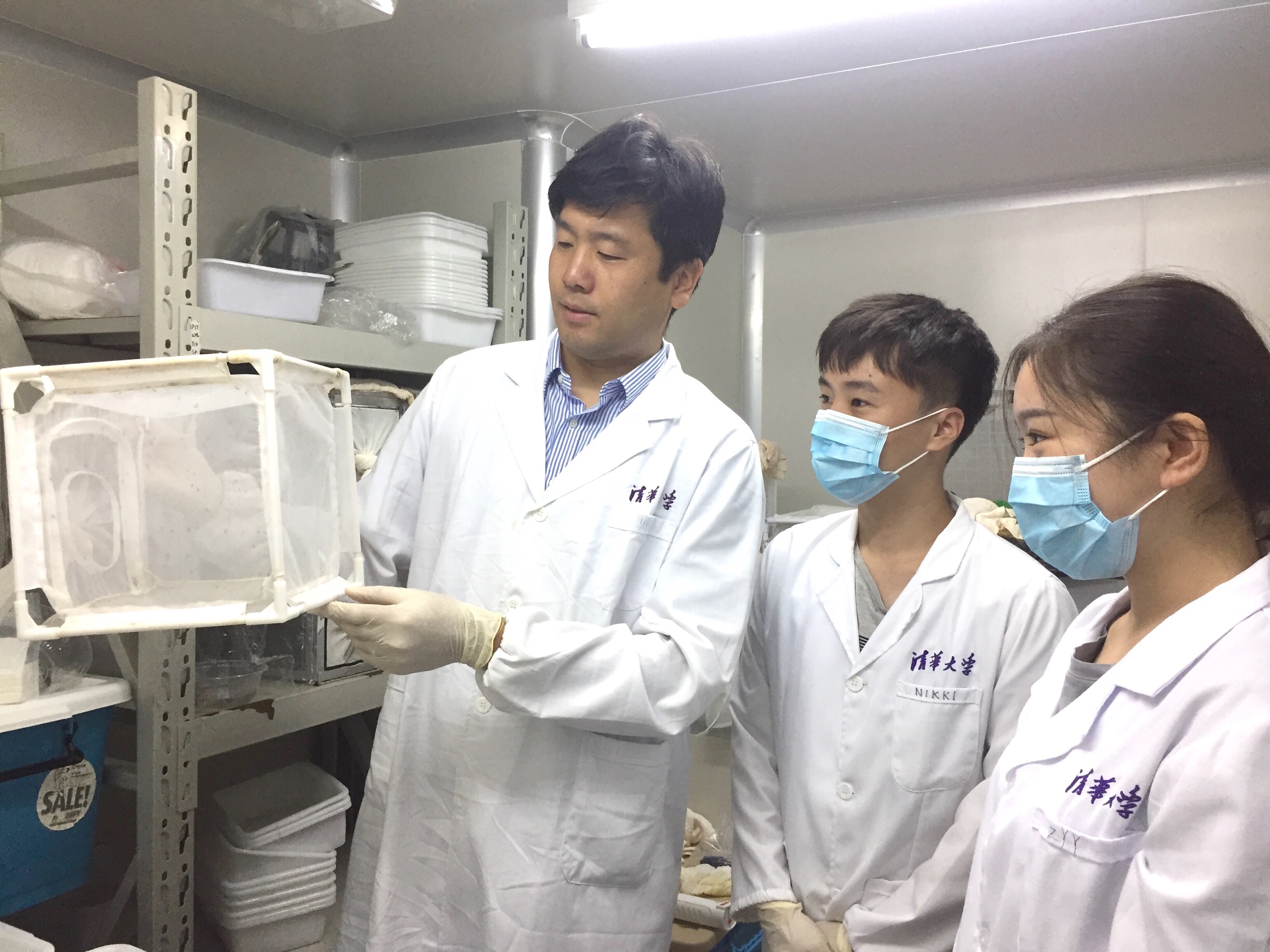
Researchers from Tsinghua University experiment on ways to control dengue virus. (Photo provided to Xinhua)
The study indicates that iron supplementation reduces dengue transmission by mosquitoes, providing a new perspective for controlling the disease.
BEIJING, Sept. 21 (Xinhua) -- Having an iron-rich diet may be an effective way to control dengue virus as mosquitoes are more likely to acquire the virus when they feed on iron-deficient blood, according to recent Chinese research.
Dengue virus is a mosquito-borne arbovirus, and blood is the primary route through which mosquitoes acquire dengue virus infections. Blood components or their metabolites may influence the spread of the dengue virus.
Researchers from Tsinghua University, the Chinese Center for Disease Control and Prevention and the University of Connecticut have conducted a series of screenings on blood components and found that serum iron in human blood modulates dengue virus acquisition by mosquitoes. Dengue virus acquisition by mosquitoes was inversely correlated with the iron concentration in serum from human donors.
The study showed that mosquitoes are less likely to acquire dengue virus when they feed on blood with high levels of iron. When the iron in the serum is acquired into the mosquito gut, it will help produce more reactive oxygen species, which controls the spread of the virus in mosquitoes.
The study indicates that iron supplementation reduces dengue transmission by mosquitoes, providing a new perspective for controlling the disease.
The results were published in the journal Nature Microbiology.
Dengue virus is transmitted by several species of mosquitoes within the genus Aedes. According to Cheng Gong from Tsinghua University, the leading investigator of this study, Aedes aegypti is an important mediator of dengue virus transmission and is widely distributed in tropical and subtropical regions. However, dengue cases are not completely consistent with the distribution of the mosquitoes.
According to data from the World Health Organization, iron deficiency is seen widely throughout Africa, South America and Southeast Asia. Furthermore, these areas correlate with dengue-endemic areas.
"We then decided to assess whether the iron-deficiency status regulates dengue prevalence," Cheng said.
The team tested the concept with mouse models. They found that mosquitoes feeding on mice infected with dengue virus were much more likely to acquire the virus if the mice had low levels of serum iron, while supplementing iron for the infected mice helped block the viral infection.
Cheng said supplementing iron for people in dengue-spreading regions might be a safe, low-cost and effective way to control the disease.
"We are promoting this method in some dengue-spreading areas and will conduct further field investigations in Southeast Asia and Africa," Cheng said.
