BEIJING, Nov. 7 (Xinhua) -- With a series of actions being taken by the central government, China's private businesses that often complain about disadvantage in market access and funding will be enabled to seek better development on a broader stage.
Over the past four days, several governmental departments including the State Administration for Market Regulation (SAMR), the Ministry of Industry and Information Technology (MIIT) and the All-China Federation of Industry and Commerce have separately announced new policies to show their unswerving support for private enterprises.
Competitive neutrality, which SAMR chief Zhang Mao mentioned in an interview with Xinhua on Monday, could be a catch-all phrase to describe this new round of policy support in the private economy.
Although the basic economic system of China requires the public sector to retain a dominant position and other diverse forms of ownership to develop side by side, it doesn't mean the government will pamper public sector competitors for the sake of their ownership.
Instead, the country's regulators want policies concerning regulation, tax, debt and public services to be impartial so as to treat all market entities fairly and equally.
For instance, SAMR said it would annul documents impeding the establishment of a unified market and fair competition by the end of this year.
Practices constraining market competition and conduct leading to monopoly, including behaviors like excessive charging, forced transactions and unreasonable trading requirements, will be disallowed.
The MIIT also said it would relax market access and lift barriers to help private businesses enter industries such as telecommunication and encourage them to participate in defense construction and utilize advanced military technologies for growth.
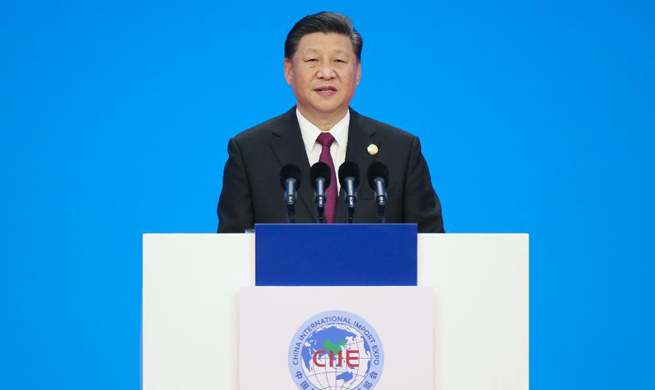
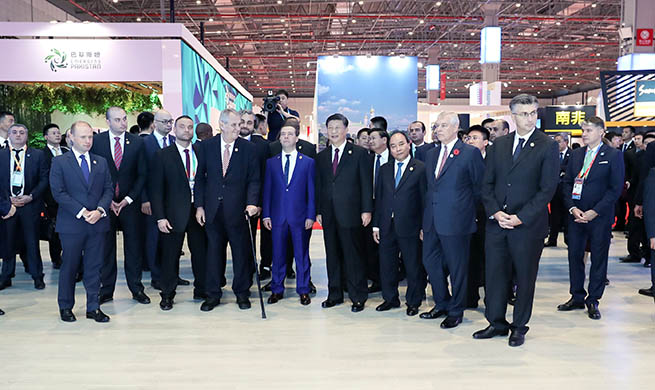
At the ongoing first China International Import Expo in Shanghai, a decision was announced that a science and technology innovation board will be launched at the Shanghai Stock Exchange, while a registration system for listed companies will be experimented with.
This decision will bring innovative private enterprises, especially smaller ones, a new channel to raise funds from the stock markets, empowering them financially to seek quicker innovations.
Starting from Jan. 1, 2019, high-tech business incubators, university science parks and makerspaces at state or provincial levels, which mostly house small innovative private businesses, will be exempt from paying housing property tax, land use tax and value-added tax so as to spur entrepreneurship and innovations, according to a separate statement by the Ministry of Finance on Monday.
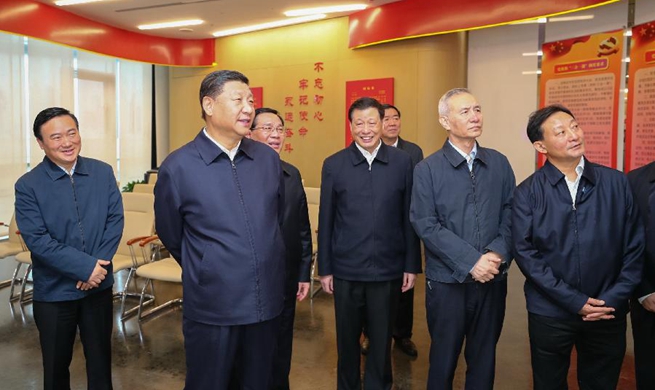
All these measures were released after a symposium on private enterprises was held in Beijing on Nov. 1, where President Xi Jinping had a discussion with representatives of private enterprises, reassuring them that the private sector "should only grow stronger instead of becoming weakened, and march toward a broader stage."
Their talks touched on very specific problems in policy implementation. For example, Xi said that the same standards should be observed for enterprises of all types of ownership in the process of reducing overcapacity and leverage.
He also demanded the establishment of a new type of cordial and clean relationship between governments and businesses. In other words, government decision makers will need to respect the opinions and appeals of private business operators more, and take initiative to help them solve problems.
After 40 years of reform and opening up, there are not only breathtaking IT giants such as Alibaba and Tencent on the landscape of China's private economy, but also 100 million small private businesses.
Together, these private businesses have so far contributed to more than 80 percent of China's urban employment and 90 percent of its new jobs.
As the government continues to cut its red tape, improve business environments and advance reforms to secure fair competition, the potential of China's private businesses will be further unleashed, and their economic impact both on home turf and across the world will become stronger.