
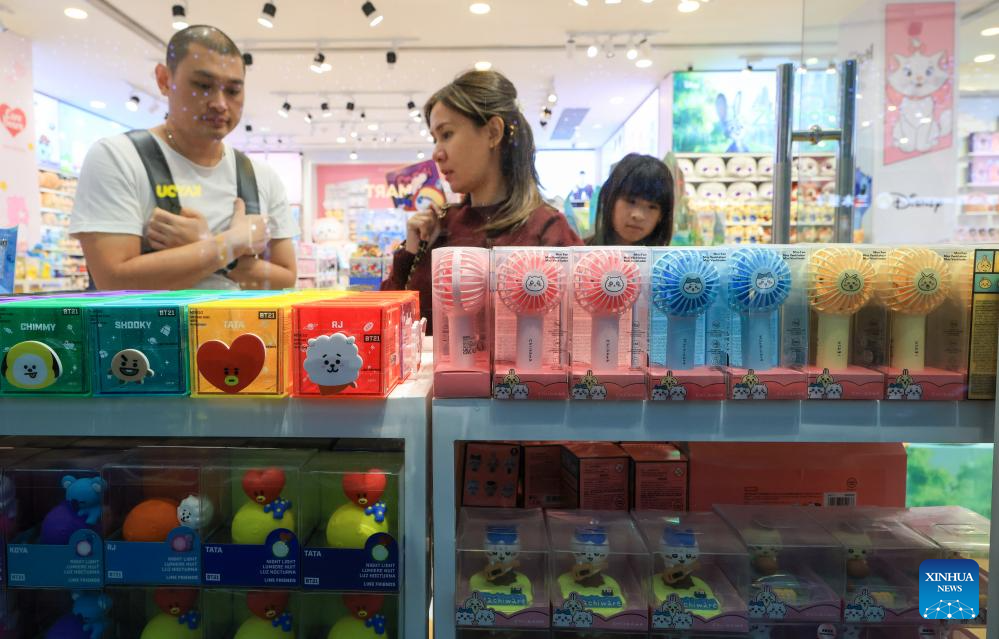
People visit a MINISO store in Macao, south China, Dec. 11, 2025.
China is one of the world's largest markets and production bases for trendy toys. "Trendy toys," ranging from blind boxes to IP-themed merchandise, have emerged as a niche but fast-growing segment, reflecting the rise of emotion-driven consumption in the country.
No longer just a manufacturing hub, China is also emerging as a source of original cultural exports and designed-in-China trendy toys are gaining international popularity.
Since 2024, a series of Chinese cultural and creative products have become breakout hits and trending topics online. Some well-known IPs, such as Labubu, Nezha, and Wukong, have raised waves of consumption craze through films, games, and various cultural derivatives.
The country's designer toy market, valued at roughly 60 billion yuan (about 8.52 billion U.S. dollars) in 2023, is projected to reach 110.1 billion yuan by 2026, with annual growth rate exceeding 20 percent. (Xinhua/Mao Siqian)
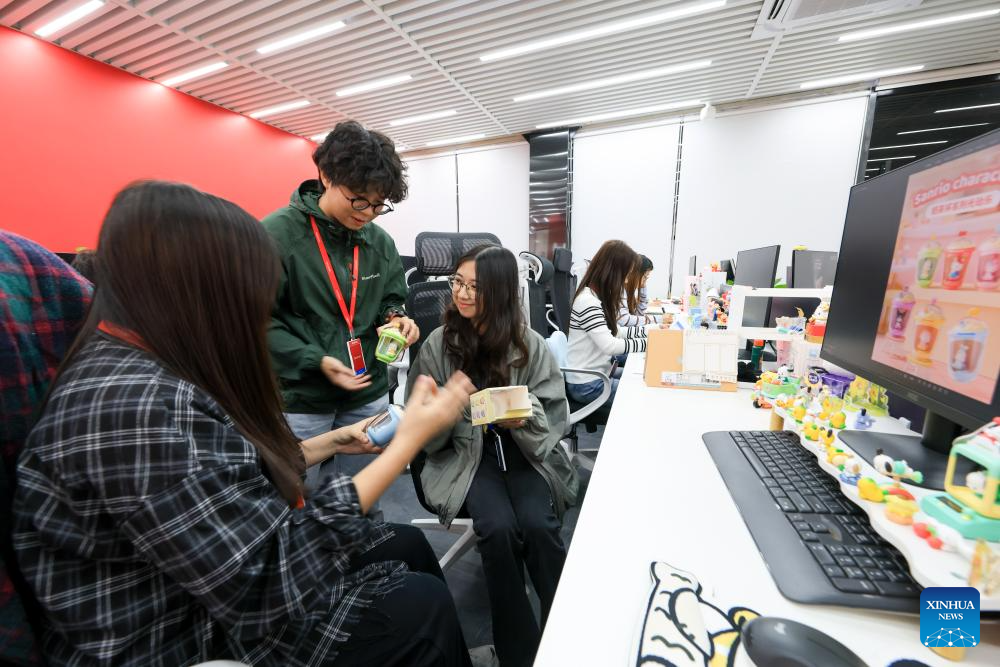
Designers talk about Sanrio-themed blind boxes at Guangzhou Moetch Cultural & Creative Co., Ltd. in Guangzhou, south China's Guangdong Province, Oct. 28, 2025.
China is one of the world's largest markets and production bases for trendy toys. "Trendy toys," ranging from blind boxes to IP-themed merchandise, have emerged as a niche but fast-growing segment, reflecting the rise of emotion-driven consumption in the country.
No longer just a manufacturing hub, China is also emerging as a source of original cultural exports and designed-in-China trendy toys are gaining international popularity.
Since 2024, a series of Chinese cultural and creative products have become breakout hits and trending topics online. Some well-known IPs, such as Labubu, Nezha, and Wukong, have raised waves of consumption craze through films, games, and various cultural derivatives.
The country's designer toy market, valued at roughly 60 billion yuan (about 8.52 billion U.S. dollars) in 2023, is projected to reach 110.1 billion yuan by 2026, with annual growth rate exceeding 20 percent. (Xinhua/Mao Siqian)
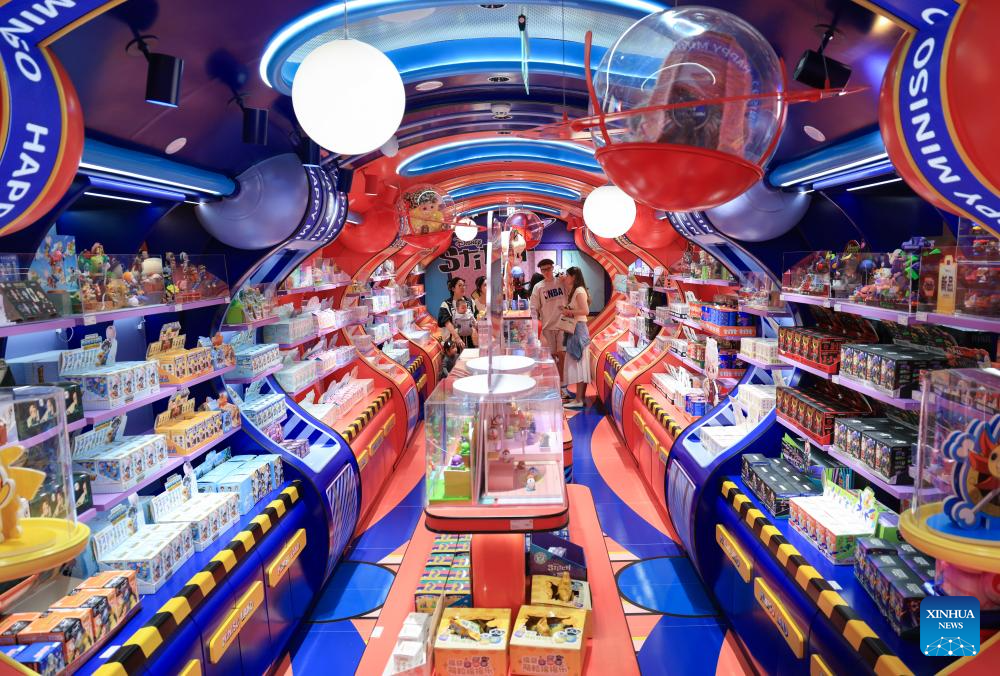
People visit a MINISO LAND store in Guangzhou, south China's Guangdong Province, Oct. 28, 2025.
China is one of the world's largest markets and production bases for trendy toys. "Trendy toys," ranging from blind boxes to IP-themed merchandise, have emerged as a niche but fast-growing segment, reflecting the rise of emotion-driven consumption in the country.
No longer just a manufacturing hub, China is also emerging as a source of original cultural exports and designed-in-China trendy toys are gaining international popularity.
Since 2024, a series of Chinese cultural and creative products have become breakout hits and trending topics online. Some well-known IPs, such as Labubu, Nezha, and Wukong, have raised waves of consumption craze through films, games, and various cultural derivatives.
The country's designer toy market, valued at roughly 60 billion yuan (about 8.52 billion U.S. dollars) in 2023, is projected to reach 110.1 billion yuan by 2026, with annual growth rate exceeding 20 percent. (Xinhua/Mao Siqian)
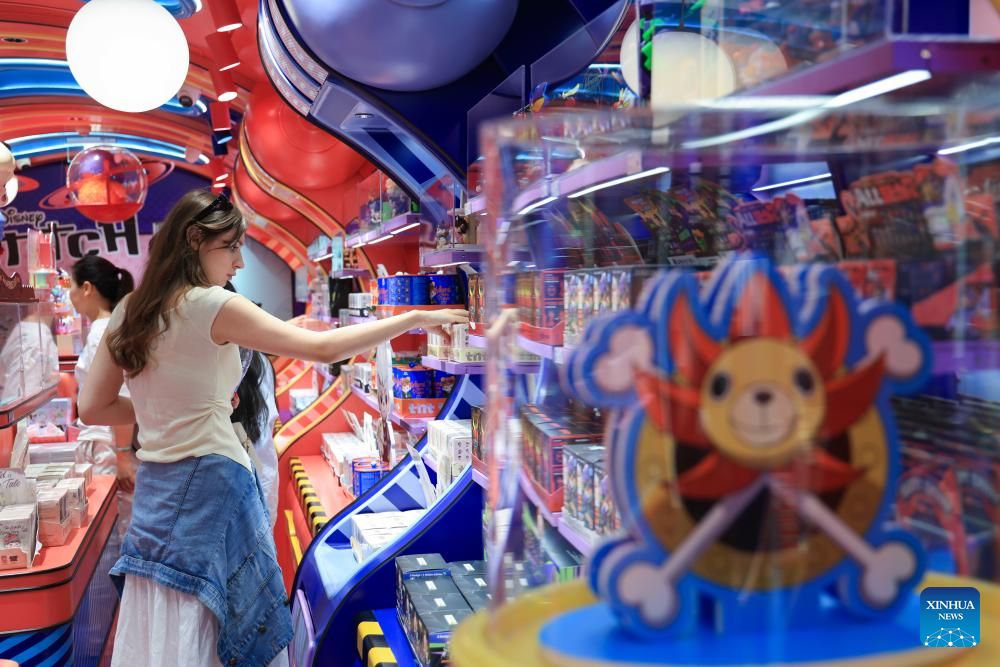
People visit a MINISO LAND store in Guangzhou, south China's Guangdong Province, Oct. 28, 2025.
China is one of the world's largest markets and production bases for trendy toys. "Trendy toys," ranging from blind boxes to IP-themed merchandise, have emerged as a niche but fast-growing segment, reflecting the rise of emotion-driven consumption in the country.
No longer just a manufacturing hub, China is also emerging as a source of original cultural exports and designed-in-China trendy toys are gaining international popularity.
Since 2024, a series of Chinese cultural and creative products have become breakout hits and trending topics online. Some well-known IPs, such as Labubu, Nezha, and Wukong, have raised waves of consumption craze through films, games, and various cultural derivatives.
The country's designer toy market, valued at roughly 60 billion yuan (about 8.52 billion U.S. dollars) in 2023, is projected to reach 110.1 billion yuan by 2026, with annual growth rate exceeding 20 percent. (Xinhua/Mao Siqian)
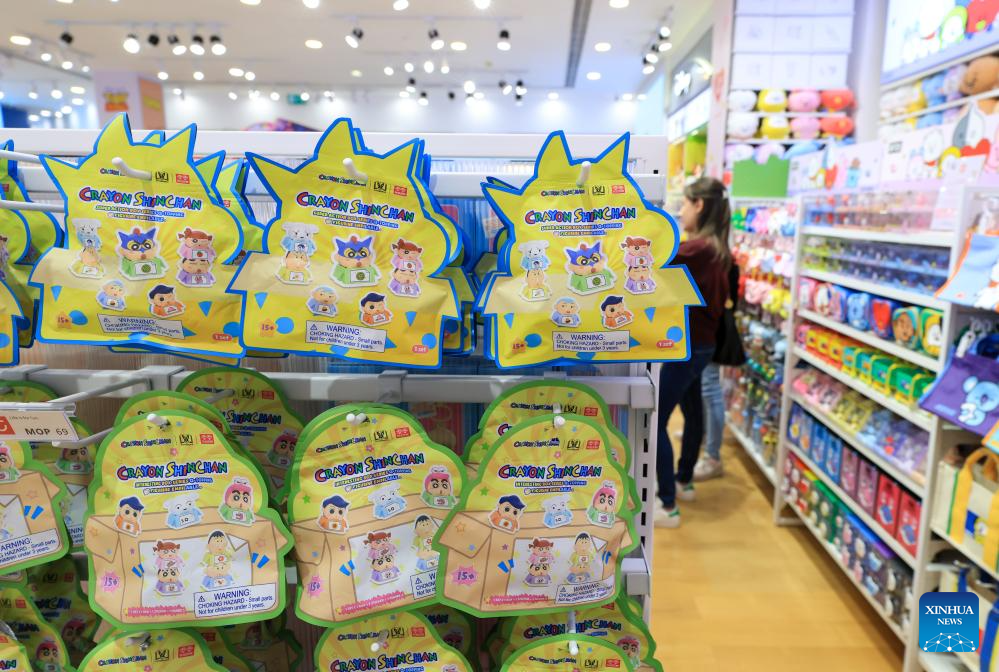
People visit a MINISO store in Macao, south China, Dec. 11, 2025.
China is one of the world's largest markets and production bases for trendy toys. "Trendy toys," ranging from blind boxes to IP-themed merchandise, have emerged as a niche but fast-growing segment, reflecting the rise of emotion-driven consumption in the country.
No longer just a manufacturing hub, China is also emerging as a source of original cultural exports and designed-in-China trendy toys are gaining international popularity.
Since 2024, a series of Chinese cultural and creative products have become breakout hits and trending topics online. Some well-known IPs, such as Labubu, Nezha, and Wukong, have raised waves of consumption craze through films, games, and various cultural derivatives.
The country's designer toy market, valued at roughly 60 billion yuan (about 8.52 billion U.S. dollars) in 2023, is projected to reach 110.1 billion yuan by 2026, with annual growth rate exceeding 20 percent. (Xinhua/Mao Siqian)
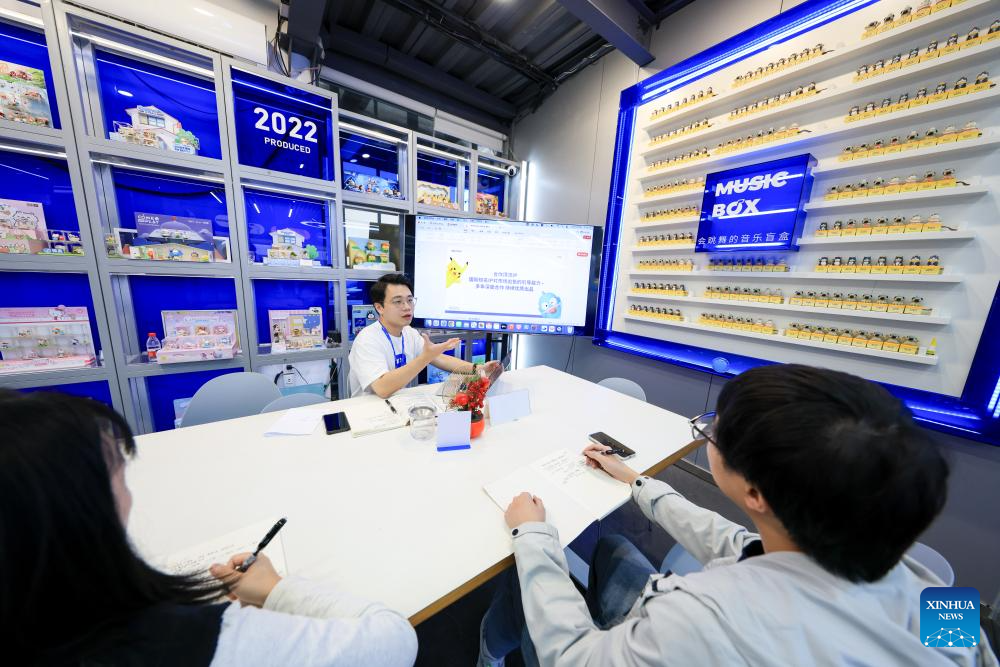
A trainer introduces new products to new recruits at Guangzhou Moetch Cultural & Creative Co., Ltd. in Guangzhou, south China's Guangdong Province, Oct. 28, 2025.
China is one of the world's largest markets and production bases for trendy toys. "Trendy toys," ranging from blind boxes to IP-themed merchandise, have emerged as a niche but fast-growing segment, reflecting the rise of emotion-driven consumption in the country.
No longer just a manufacturing hub, China is also emerging as a source of original cultural exports and designed-in-China trendy toys are gaining international popularity.
Since 2024, a series of Chinese cultural and creative products have become breakout hits and trending topics online. Some well-known IPs, such as Labubu, Nezha, and Wukong, have raised waves of consumption craze through films, games, and various cultural derivatives.
The country's designer toy market, valued at roughly 60 billion yuan (about 8.52 billion U.S. dollars) in 2023, is projected to reach 110.1 billion yuan by 2026, with annual growth rate exceeding 20 percent. (Xinhua/Mao Siqian)
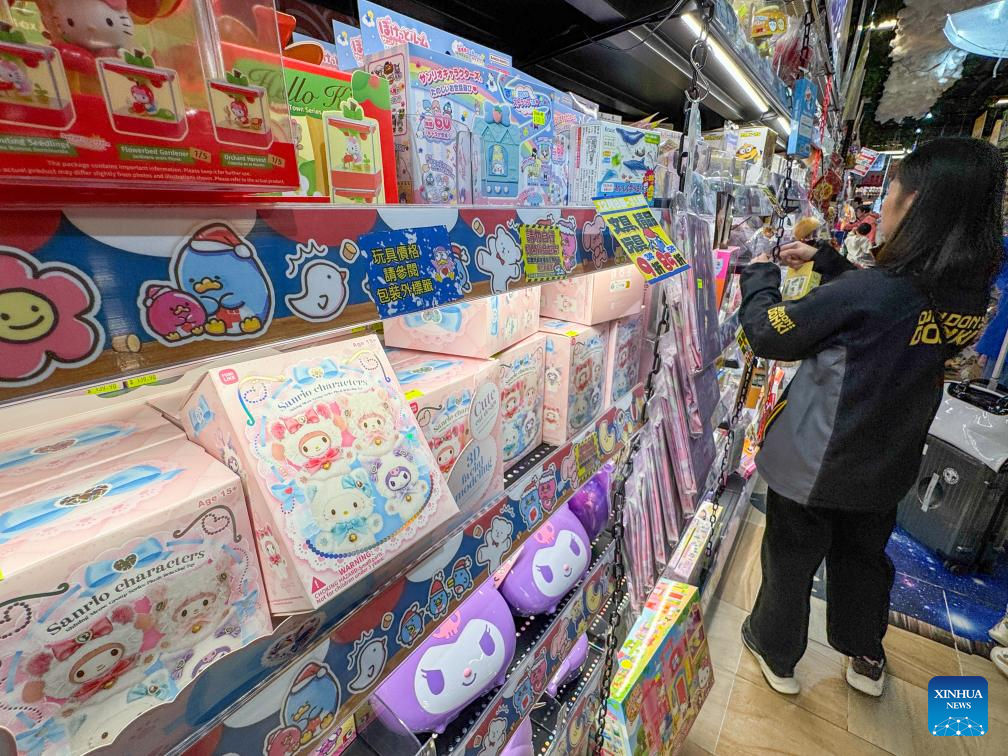
This photo shows Sanrio-themed blind boxes made by Guangzhou Moetch Cultural & Creative Co., Ltd. at a Don Don Donki store in Macao, south China, Dec. 14, 2025.
China is one of the world's largest markets and production bases for trendy toys. "Trendy toys," ranging from blind boxes to IP-themed merchandise, have emerged as a niche but fast-growing segment, reflecting the rise of emotion-driven consumption in the country.
No longer just a manufacturing hub, China is also emerging as a source of original cultural exports and designed-in-China trendy toys are gaining international popularity.
Since 2024, a series of Chinese cultural and creative products have become breakout hits and trending topics online. Some well-known IPs, such as Labubu, Nezha, and Wukong, have raised waves of consumption craze through films, games, and various cultural derivatives.
The country's designer toy market, valued at roughly 60 billion yuan (about 8.52 billion U.S. dollars) in 2023, is projected to reach 110.1 billion yuan by 2026, with annual growth rate exceeding 20 percent. (Xinhua/Mao Siqian)
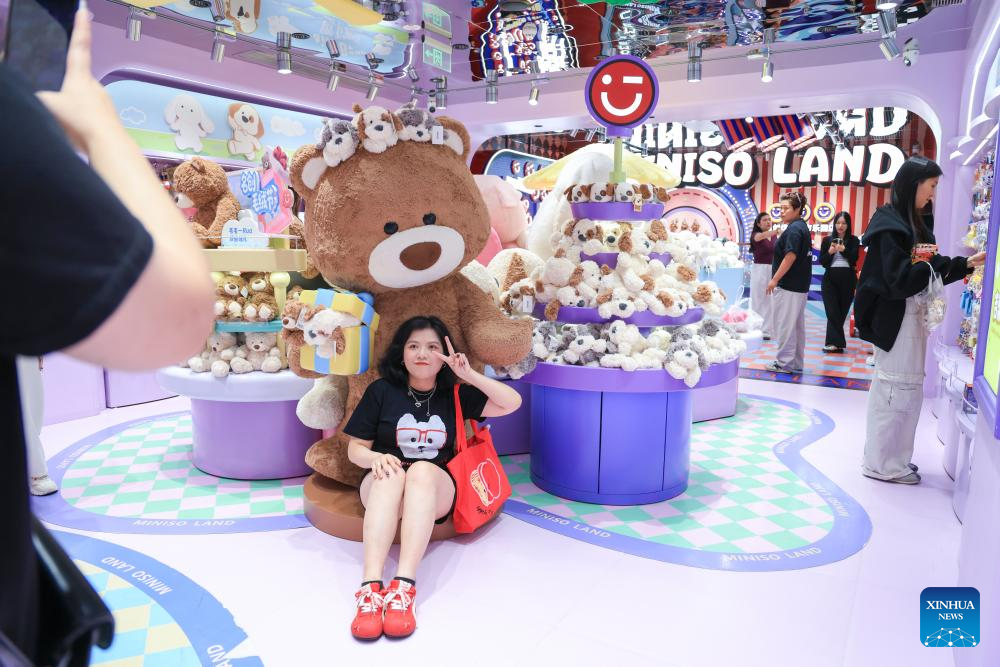
People visit a MINISO LAND store in Guangzhou, south China's Guangdong Province, Oct. 28, 2025.
China is one of the world's largest markets and production bases for trendy toys. "Trendy toys," ranging from blind boxes to IP-themed merchandise, have emerged as a niche but fast-growing segment, reflecting the rise of emotion-driven consumption in the country.
No longer just a manufacturing hub, China is also emerging as a source of original cultural exports and designed-in-China trendy toys are gaining international popularity.
Since 2024, a series of Chinese cultural and creative products have become breakout hits and trending topics online. Some well-known IPs, such as Labubu, Nezha, and Wukong, have raised waves of consumption craze through films, games, and various cultural derivatives.
The country's designer toy market, valued at roughly 60 billion yuan (about 8.52 billion U.S. dollars) in 2023, is projected to reach 110.1 billion yuan by 2026, with annual growth rate exceeding 20 percent. (Xinhua/Mao Siqian)
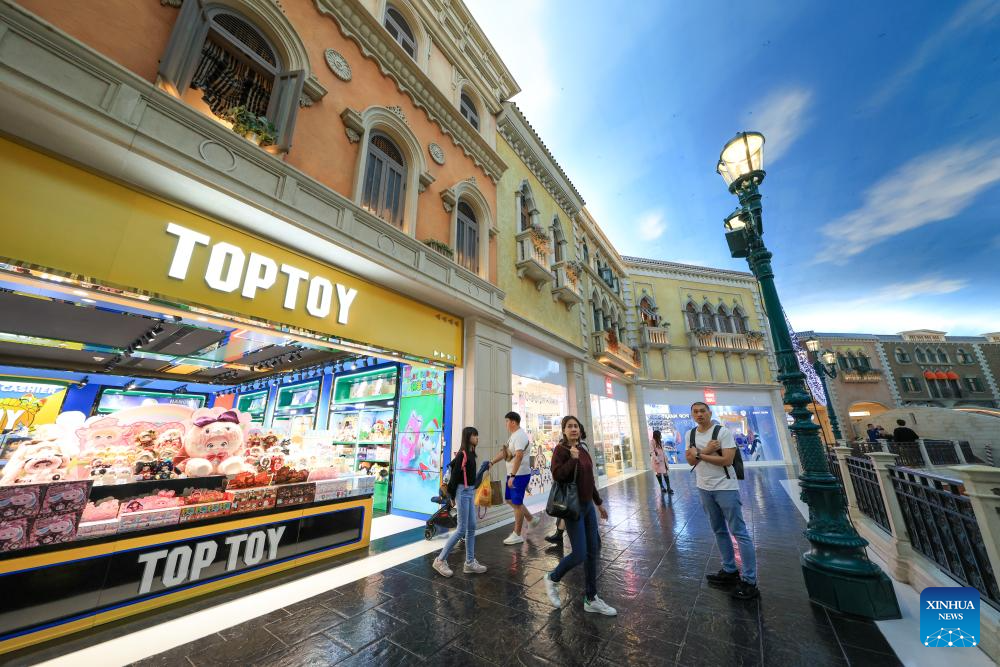
Tourists walk past a TOP TOY store in Macao, south China, Dec. 11, 2025.
China is one of the world's largest markets and production bases for trendy toys. "Trendy toys," ranging from blind boxes to IP-themed merchandise, have emerged as a niche but fast-growing segment, reflecting the rise of emotion-driven consumption in the country.
No longer just a manufacturing hub, China is also emerging as a source of original cultural exports and designed-in-China trendy toys are gaining international popularity.
Since 2024, a series of Chinese cultural and creative products have become breakout hits and trending topics online. Some well-known IPs, such as Labubu, Nezha, and Wukong, have raised waves of consumption craze through films, games, and various cultural derivatives.
The country's designer toy market, valued at roughly 60 billion yuan (about 8.52 billion U.S. dollars) in 2023, is projected to reach 110.1 billion yuan by 2026, with annual growth rate exceeding 20 percent. (Xinhua/Mao Siqian)
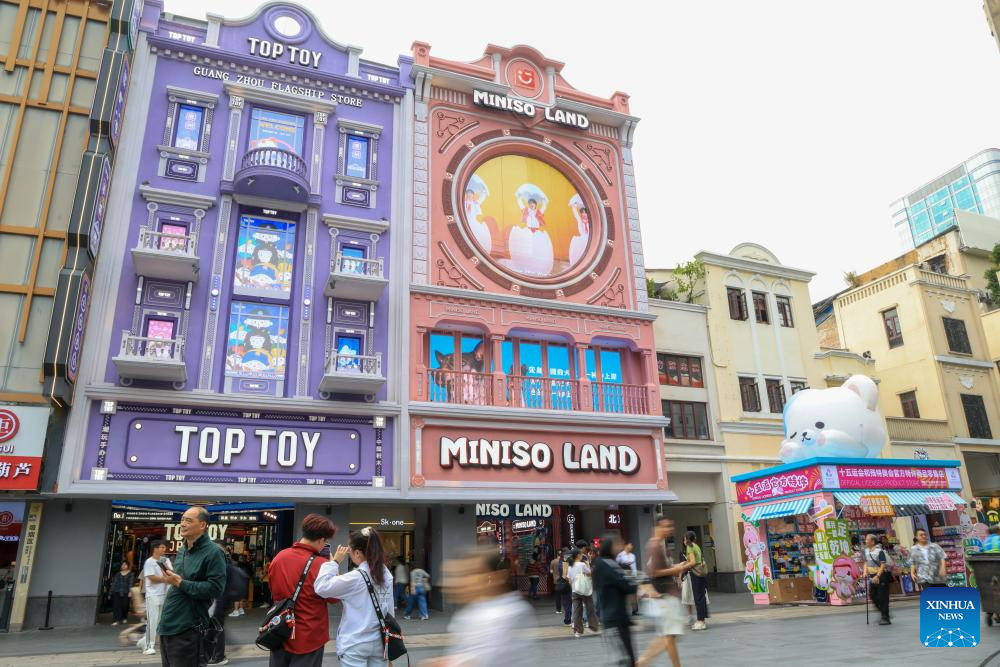
This photo shows a MINISO LAND store and a TOP TOY store on Beijing Road, a bustling pedestrian street in Guangzhou, south China's Guangdong Province, Oct. 28, 2025.
China is one of the world's largest markets and production bases for trendy toys. "Trendy toys," ranging from blind boxes to IP-themed merchandise, have emerged as a niche but fast-growing segment, reflecting the rise of emotion-driven consumption in the country.
No longer just a manufacturing hub, China is also emerging as a source of original cultural exports and designed-in-China trendy toys are gaining international popularity.
Since 2024, a series of Chinese cultural and creative products have become breakout hits and trending topics online. Some well-known IPs, such as Labubu, Nezha, and Wukong, have raised waves of consumption craze through films, games, and various cultural derivatives.
The country's designer toy market, valued at roughly 60 billion yuan (about 8.52 billion U.S. dollars) in 2023, is projected to reach 110.1 billion yuan by 2026, with annual growth rate exceeding 20 percent. (Xinhua/Mao Siqian)
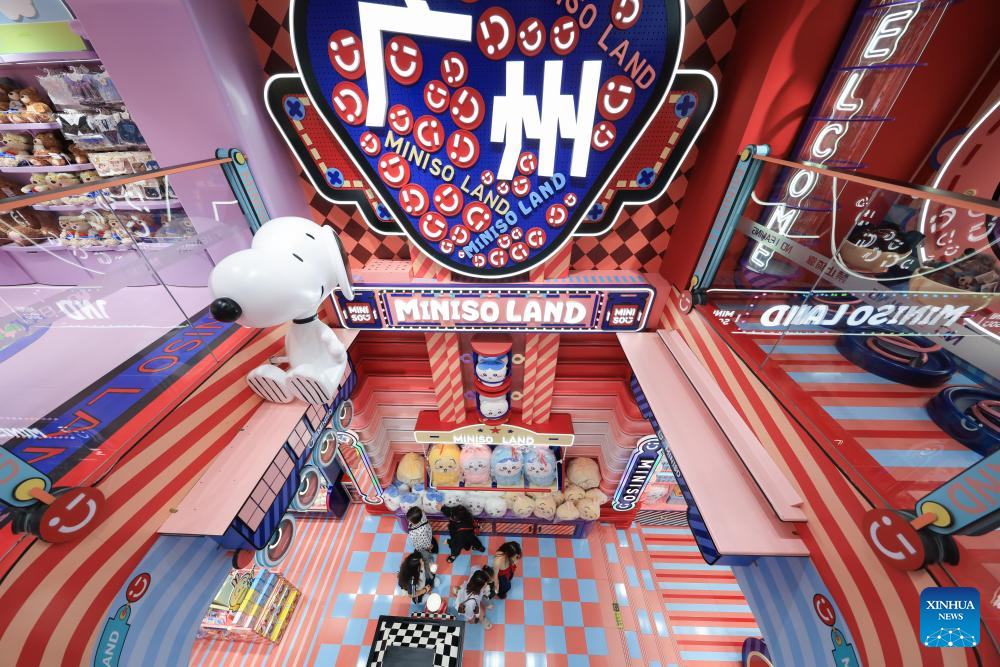
People visit a MINISO LAND store in Guangzhou, south China's Guangdong Province, Oct. 28, 2025.
China is one of the world's largest markets and production bases for trendy toys. "Trendy toys," ranging from blind boxes to IP-themed merchandise, have emerged as a niche but fast-growing segment, reflecting the rise of emotion-driven consumption in the country.
No longer just a manufacturing hub, China is also emerging as a source of original cultural exports and designed-in-China trendy toys are gaining international popularity.
Since 2024, a series of Chinese cultural and creative products have become breakout hits and trending topics online. Some well-known IPs, such as Labubu, Nezha, and Wukong, have raised waves of consumption craze through films, games, and various cultural derivatives.
The country's designer toy market, valued at roughly 60 billion yuan (about 8.52 billion U.S. dollars) in 2023, is projected to reach 110.1 billion yuan by 2026, with annual growth rate exceeding 20 percent. (Xinhua/Mao Siqian)
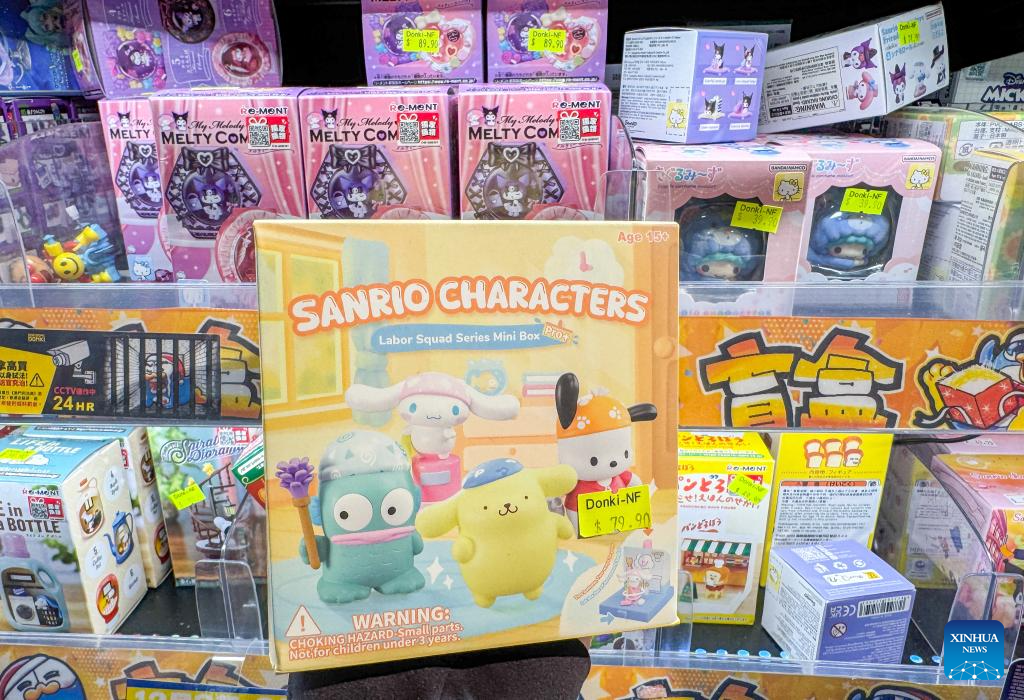
This photo shows a Sanrio-themed product made by Guangzhou Moetch Cultural & Creative Co., Ltd. at a Don Don Donki store in Macao, south China, Dec. 14, 2025.
China is one of the world's largest markets and production bases for trendy toys. "Trendy toys," ranging from blind boxes to IP-themed merchandise, have emerged as a niche but fast-growing segment, reflecting the rise of emotion-driven consumption in the country.
No longer just a manufacturing hub, China is also emerging as a source of original cultural exports and designed-in-China trendy toys are gaining international popularity.
Since 2024, a series of Chinese cultural and creative products have become breakout hits and trending topics online. Some well-known IPs, such as Labubu, Nezha, and Wukong, have raised waves of consumption craze through films, games, and various cultural derivatives.
The country's designer toy market, valued at roughly 60 billion yuan (about 8.52 billion U.S. dollars) in 2023, is projected to reach 110.1 billion yuan by 2026, with annual growth rate exceeding 20 percent. (Xinhua/Mao Siqian)
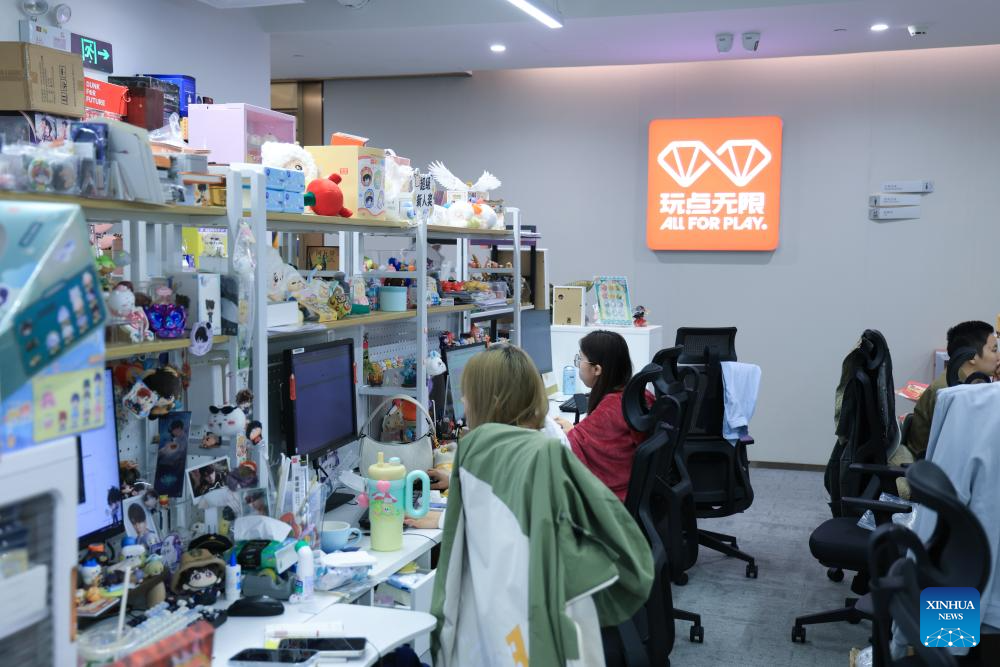
Staff members work at the headquarters of All For Play, a trendy toy brand, in Guangzhou, south China's Guangdong Province, Oct. 28, 2025.
China is one of the world's largest markets and production bases for trendy toys. "Trendy toys," ranging from blind boxes to IP-themed merchandise, have emerged as a niche but fast-growing segment, reflecting the rise of emotion-driven consumption in the country.
No longer just a manufacturing hub, China is also emerging as a source of original cultural exports and designed-in-China trendy toys are gaining international popularity.
Since 2024, a series of Chinese cultural and creative products have become breakout hits and trending topics online. Some well-known IPs, such as Labubu, Nezha, and Wukong, have raised waves of consumption craze through films, games, and various cultural derivatives.
The country's designer toy market, valued at roughly 60 billion yuan (about 8.52 billion U.S. dollars) in 2023, is projected to reach 110.1 billion yuan by 2026, with annual growth rate exceeding 20 percent. (Xinhua/Huo Siying)
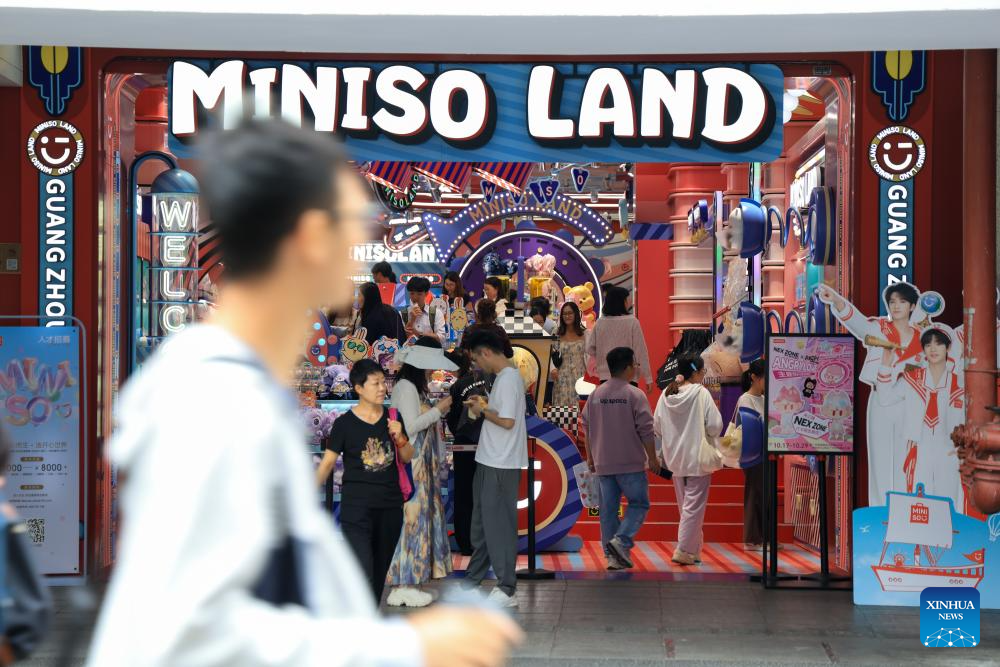
People visit a MINISO LAND store in Guangzhou, south China's Guangdong Province, Oct. 28, 2025.
China is one of the world's largest markets and production bases for trendy toys. "Trendy toys," ranging from blind boxes to IP-themed merchandise, have emerged as a niche but fast-growing segment, reflecting the rise of emotion-driven consumption in the country.
No longer just a manufacturing hub, China is also emerging as a source of original cultural exports and designed-in-China trendy toys are gaining international popularity.
Since 2024, a series of Chinese cultural and creative products have become breakout hits and trending topics online. Some well-known IPs, such as Labubu, Nezha, and Wukong, have raised waves of consumption craze through films, games, and various cultural derivatives.
The country's designer toy market, valued at roughly 60 billion yuan (about 8.52 billion U.S. dollars) in 2023, is projected to reach 110.1 billion yuan by 2026, with annual growth rate exceeding 20 percent. (Xinhua/Mao Siqian)
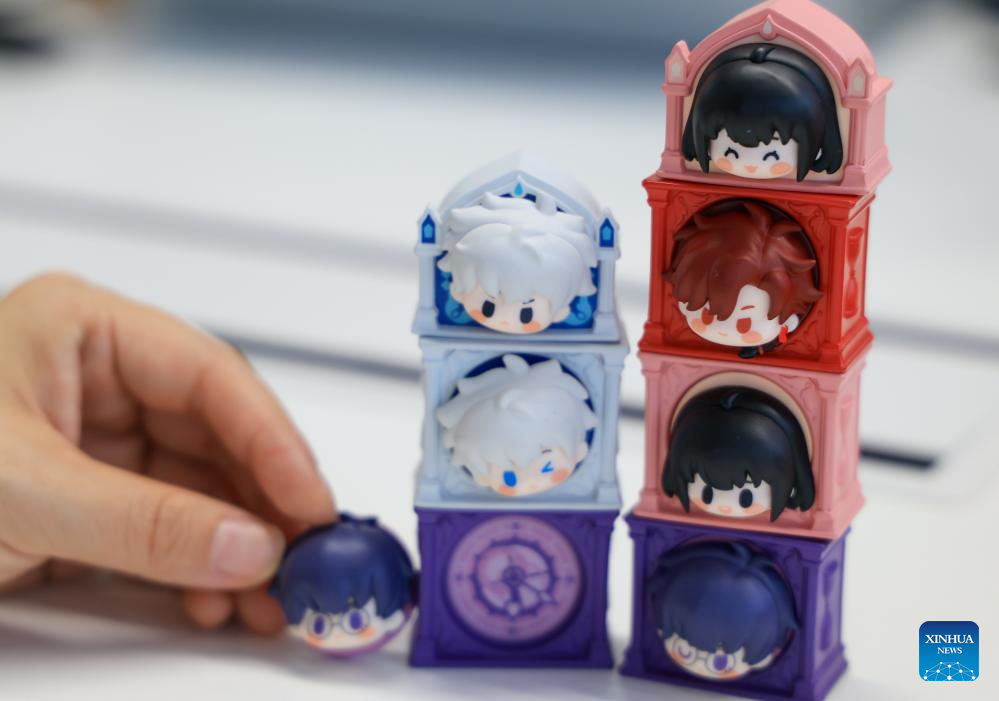
A staff member shows creative toys at the headquarters of All For Play, a trendy toy brand, in Guangzhou, south China's Guangdong Province, Oct. 28, 2025.
China is one of the world's largest markets and production bases for trendy toys. "Trendy toys," ranging from blind boxes to IP-themed merchandise, have emerged as a niche but fast-growing segment, reflecting the rise of emotion-driven consumption in the country.
No longer just a manufacturing hub, China is also emerging as a source of original cultural exports and designed-in-China trendy toys are gaining international popularity.
Since 2024, a series of Chinese cultural and creative products have become breakout hits and trending topics online. Some well-known IPs, such as Labubu, Nezha, and Wukong, have raised waves of consumption craze through films, games, and various cultural derivatives.
The country's designer toy market, valued at roughly 60 billion yuan (about 8.52 billion U.S. dollars) in 2023, is projected to reach 110.1 billion yuan by 2026, with annual growth rate exceeding 20 percent. (Xinhua/Huo Siying)
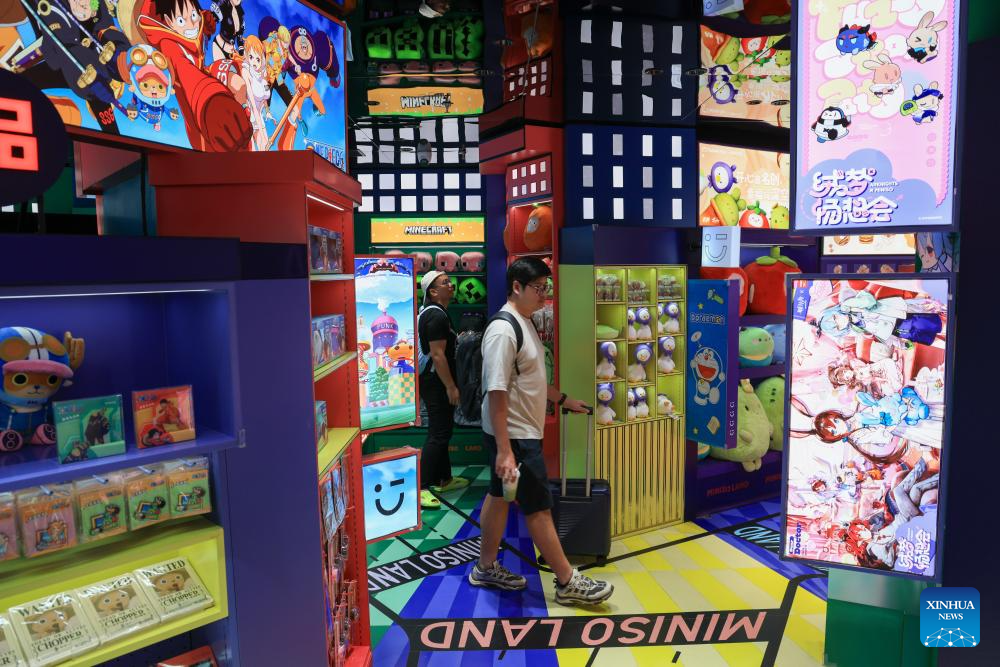
People visit a MINISO LAND store in Guangzhou, south China's Guangdong Province, Oct. 28, 2025.
China is one of the world's largest markets and production bases for trendy toys. "Trendy toys," ranging from blind boxes to IP-themed merchandise, have emerged as a niche but fast-growing segment, reflecting the rise of emotion-driven consumption in the country.
No longer just a manufacturing hub, China is also emerging as a source of original cultural exports and designed-in-China trendy toys are gaining international popularity.
Since 2024, a series of Chinese cultural and creative products have become breakout hits and trending topics online. Some well-known IPs, such as Labubu, Nezha, and Wukong, have raised waves of consumption craze through films, games, and various cultural derivatives.
The country's designer toy market, valued at roughly 60 billion yuan (about 8.52 billion U.S. dollars) in 2023, is projected to reach 110.1 billion yuan by 2026, with annual growth rate exceeding 20 percent. (Xinhua/Mao Siqian)
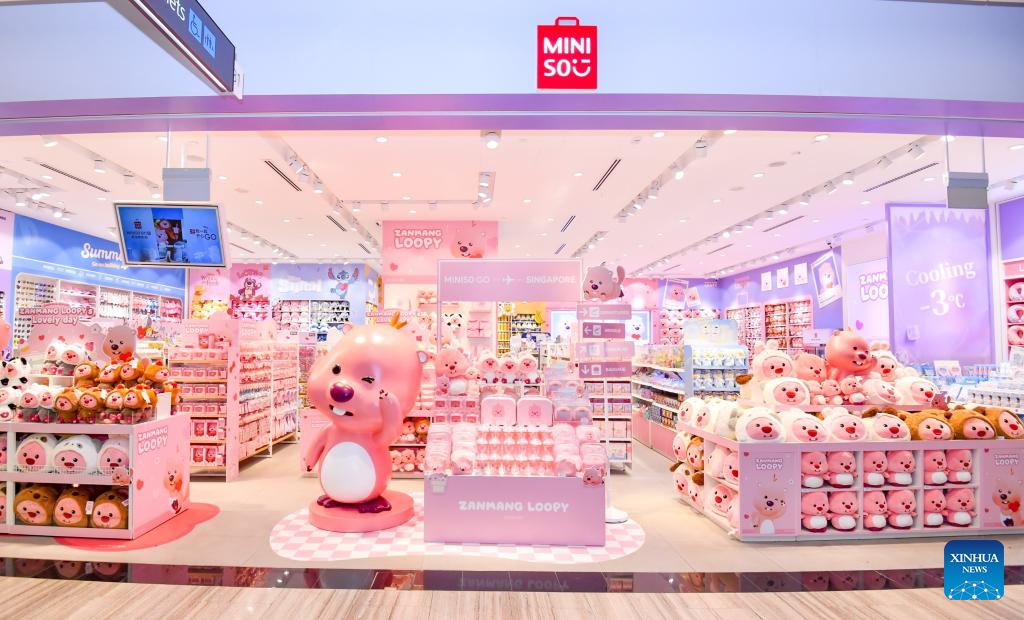
This undated file photo shows a MINISO store at Singapore Changi Airport in Singapore.
China is one of the world's largest markets and production bases for trendy toys. "Trendy toys," ranging from blind boxes to IP-themed merchandise, have emerged as a niche but fast-growing segment, reflecting the rise of emotion-driven consumption in the country.
No longer just a manufacturing hub, China is also emerging as a source of original cultural exports and designed-in-China trendy toys are gaining international popularity.
Since 2024, a series of Chinese cultural and creative products have become breakout hits and trending topics online. Some well-known IPs, such as Labubu, Nezha, and Wukong, have raised waves of consumption craze through films, games, and various cultural derivatives.
The country's designer toy market, valued at roughly 60 billion yuan (about 8.52 billion U.S. dollars) in 2023, is projected to reach 110.1 billion yuan by 2026, with annual growth rate exceeding 20 percent. (Xinhua)
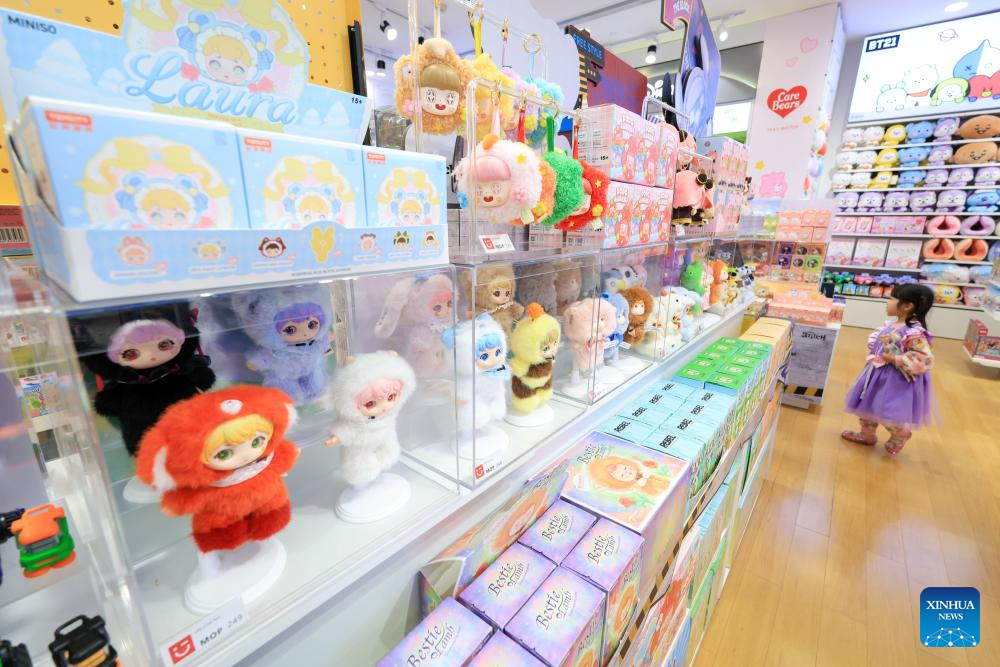
A child visits a MINISO store in Macao, south China, Dec. 11, 2025.
China is one of the world's largest markets and production bases for trendy toys. "Trendy toys," ranging from blind boxes to IP-themed merchandise, have emerged as a niche but fast-growing segment, reflecting the rise of emotion-driven consumption in the country.
No longer just a manufacturing hub, China is also emerging as a source of original cultural exports and designed-in-China trendy toys are gaining international popularity.
Since 2024, a series of Chinese cultural and creative products have become breakout hits and trending topics online. Some well-known IPs, such as Labubu, Nezha, and Wukong, have raised waves of consumption craze through films, games, and various cultural derivatives.
The country's designer toy market, valued at roughly 60 billion yuan (about 8.52 billion U.S. dollars) in 2023, is projected to reach 110.1 billion yuan by 2026, with annual growth rate exceeding 20 percent. (Xinhua/Mao Siqian)
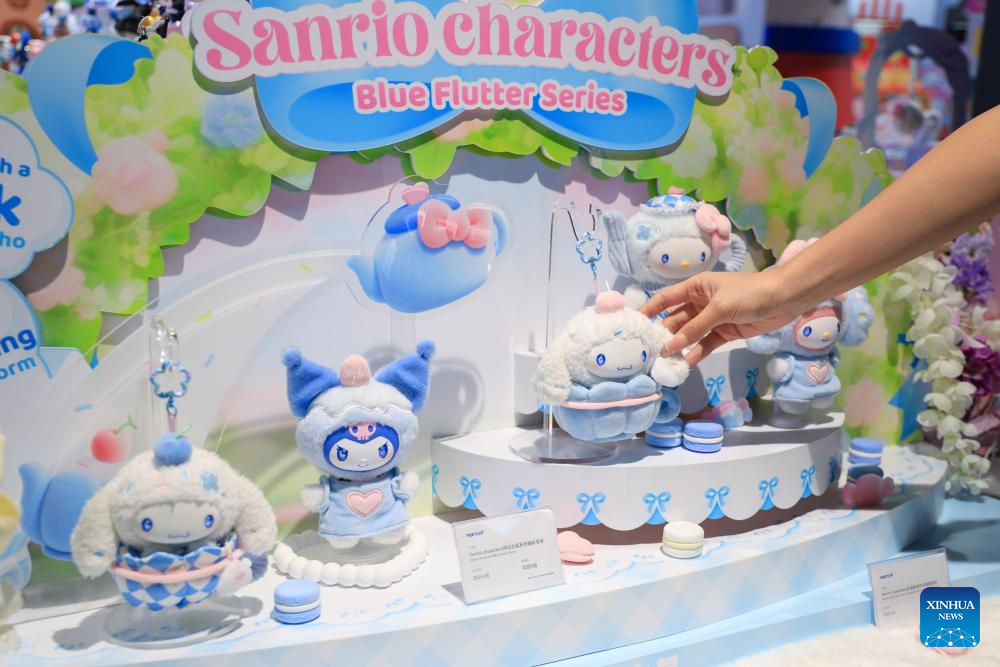
This photo shows Sanrio-themed products at Guangzhou Moetch Cultural & Creative Co., Ltd. in Guangzhou, south China's Guangdong Province, Oct. 28, 2025.
China is one of the world's largest markets and production bases for trendy toys. "Trendy toys," ranging from blind boxes to IP-themed merchandise, have emerged as a niche but fast-growing segment, reflecting the rise of emotion-driven consumption in the country.
No longer just a manufacturing hub, China is also emerging as a source of original cultural exports and designed-in-China trendy toys are gaining international popularity.
Since 2024, a series of Chinese cultural and creative products have become breakout hits and trending topics online. Some well-known IPs, such as Labubu, Nezha, and Wukong, have raised waves of consumption craze through films, games, and various cultural derivatives.
The country's designer toy market, valued at roughly 60 billion yuan (about 8.52 billion U.S. dollars) in 2023, is projected to reach 110.1 billion yuan by 2026, with annual growth rate exceeding 20 percent. (Xinhua/Huo Siying)
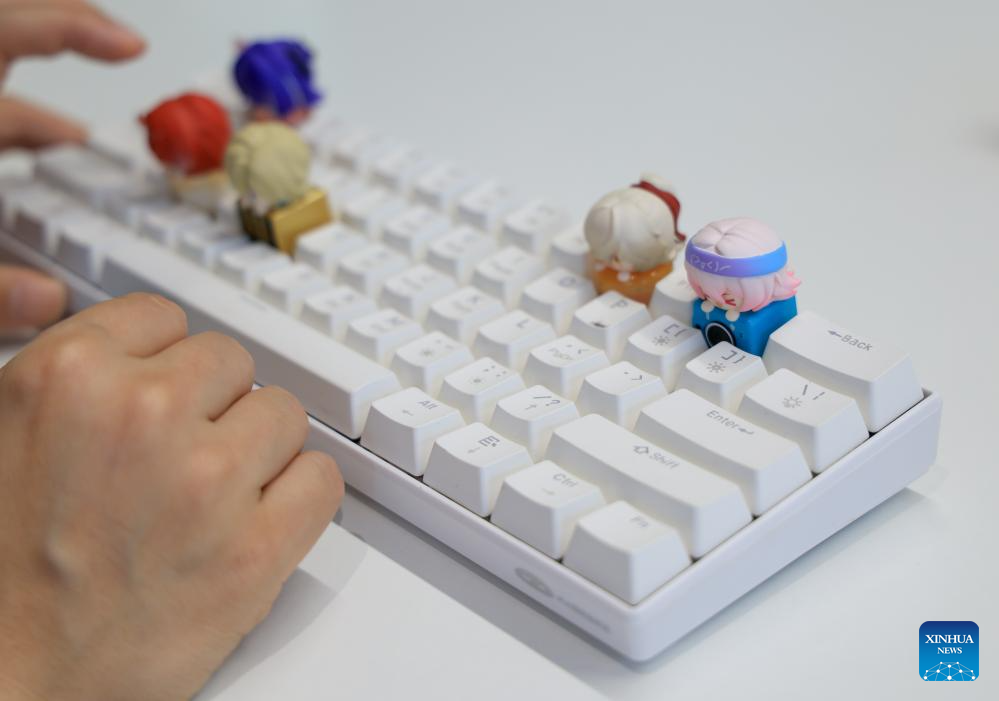
This photo shows keyboard decorations at the headquarters of All For Play, a trendy toy brand, in Guangzhou, south China's Guangdong Province, Oct. 28, 2025.
China is one of the world's largest markets and production bases for trendy toys. "Trendy toys," ranging from blind boxes to IP-themed merchandise, have emerged as a niche but fast-growing segment, reflecting the rise of emotion-driven consumption in the country.
No longer just a manufacturing hub, China is also emerging as a source of original cultural exports and designed-in-China trendy toys are gaining international popularity.
Since 2024, a series of Chinese cultural and creative products have become breakout hits and trending topics online. Some well-known IPs, such as Labubu, Nezha, and Wukong, have raised waves of consumption craze through films, games, and various cultural derivatives.
The country's designer toy market, valued at roughly 60 billion yuan (about 8.52 billion U.S. dollars) in 2023, is projected to reach 110.1 billion yuan by 2026, with annual growth rate exceeding 20 percent. (Xinhua/Huo Siying)
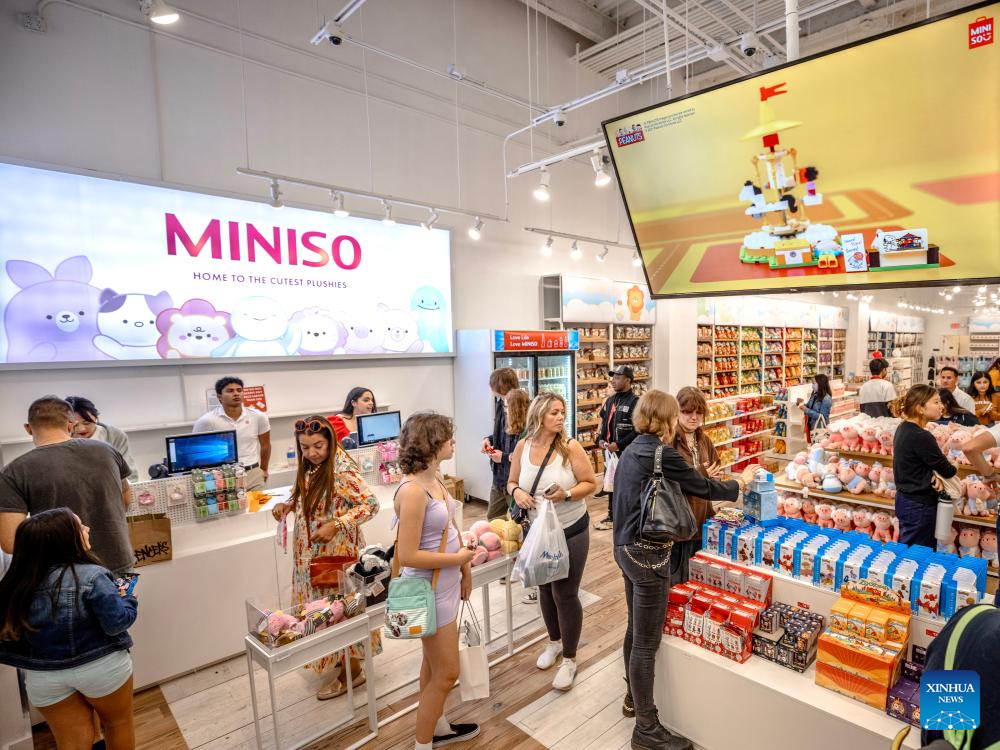
This undated file photo shows people visiting a MINISO store in Manhattan, New York, the United States.
China is one of the world's largest markets and production bases for trendy toys. "Trendy toys," ranging from blind boxes to IP-themed merchandise, have emerged as a niche but fast-growing segment, reflecting the rise of emotion-driven consumption in the country.
No longer just a manufacturing hub, China is also emerging as a source of original cultural exports and designed-in-China trendy toys are gaining international popularity.
Since 2024, a series of Chinese cultural and creative products have become breakout hits and trending topics online. Some well-known IPs, such as Labubu, Nezha, and Wukong, have raised waves of consumption craze through films, games, and various cultural derivatives.
The country's designer toy market, valued at roughly 60 billion yuan (about 8.52 billion U.S. dollars) in 2023, is projected to reach 110.1 billion yuan by 2026, with annual growth rate exceeding 20 percent. (Xinhua)


