Xinhua Headlines: How archaeology reveals roots of China's uninterrupted civilization

BEIJING, Jan. 31 (Xinhua) -- On a crisp winter morning in early 2026, hundreds of runners gathered at the Liangzhu Archaeological Ruins in eastern China, a UNESCO World Heritage Site dating back more than 5,300 years.
At the starting signal, they set off along routes once traced by ancient city walls and waterways, turning a contemporary New Year's ritual into a fleeting encounter with deep history.
For many participants, the run was less about competition and more about immersing themselves in the remnants of one of East Asia's earliest urban civilizations. This scene reflects a broader trend as China's distant past is increasingly experienced not just in textbooks but in everyday life.
The country's staggering total of approximately 1.5 billion museum visits each year underscores a profound public quest to understand the roots and uninterrupted journey of Chinese civilization.
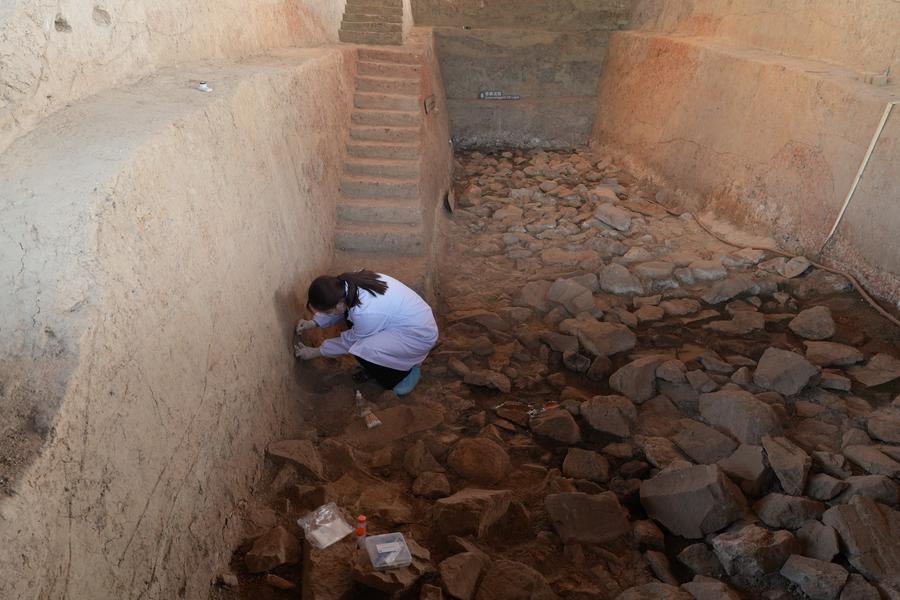
This curiosity coincides with a sustained national push for archaeological research. Between 2021 and 2025, over 7,700 projects nationwide led to the discovery of more than 130,000 cultural relics, generating fresh evidence that deepens understanding of China's roots while feeding into global discussions on the continuity, diversity and evolution of human civilization.
ENRICHING THE GLOBAL PICTURE OF HUMAN HISTORY
For international researchers, recent archaeological findings in China have also carried broader significance. They have added new data to global debates on early human migration, long-term tool-making practices and adaptation to extreme environments.
At the Salawusu site in north China's Inner Mongolia, one of the earliest Paleolithic sites discovered in China, researchers have unearthed abundant fossils, stone tools and evidence of fire use from at least 50,000 years ago.
According to Chen Fuyou, a researcher with the Chinese Academy of Sciences, the distinctive, finely made stone tools exhibit a consistent technological tradition in northern China over millennia, providing solid material evidence for the continuous evolution of early human populations in East Asia.
Further southwest, new discoveries on the eastern edge of the Qinghai-Tibet Plateau have reshaped assumptions about human resilience. Paleolithic sites found at elevations of around 4,300 meters show that prehistoric groups were capable of adapting to low oxygen levels and harsh climates much earlier than previously thought.
Taken together, each site and artifact forms part of a larger mosaic, gradually piecing together a multidimensional picture of the long and continuous evolution of Chinese civilization.
TRACING ORIGINS OF A CONTINUOUS CIVILIZATION
Of the world's ancient civilizations, the Chinese civilization has continued uninterrupted to this day. To decode this exceptional continuity, China launched a long-term project more than two decades ago to trace its civilizational origins.
Experts working under the project set a new criterion for civilization, namely the emergence of a state, a standard that goes beyond traditional benchmarks such as writing, metallurgy and cities.
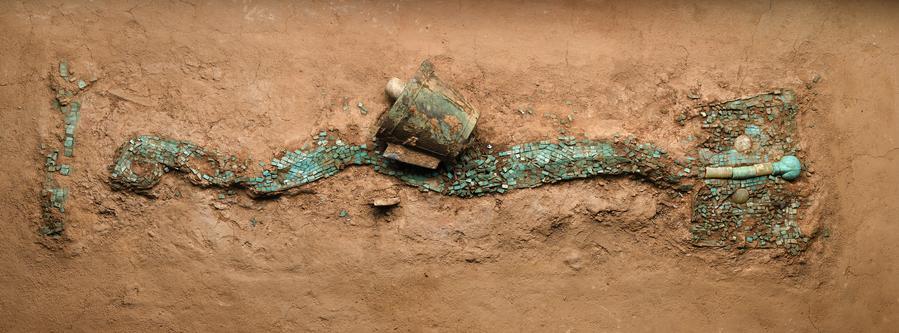
A cornerstone of this research is the Erlitou site in central China's Henan. Excavated since 1959, this site is widely regarded by Chinese scholars as a major urban center associated with the Xia Dynasty (2070-1600 B.C.), traditionally considered China's first dynasty.
The most critical discovery at the site is the presence of China's earliest grid-patterned capital layout, offering rare insights into the capital system of early states.
Erlitou is part of a constellation of key sites. From the ritual complexes at the Niuheliang site in Liaoning to the exquisite pottery at the Taosi site in Shanxi, each discovery has helped clarify the picture of China's early history.
This grand narrative of continuity is given tangible form through a national network of 150 major archaeological sites, 65 national archaeological parks, and over 240 on-site museums. Together, they form an indelible material record spanning millions of years of human history, 10,000 years of culture and over 5,000 years of Chinese civilization.
This enduring sequence, uniquely preserved in China, provides the definitive archaeological answer to the question of how a civilization can span millennia.
FROM ANCIENT INTEGRATION TO MODERN BONDS
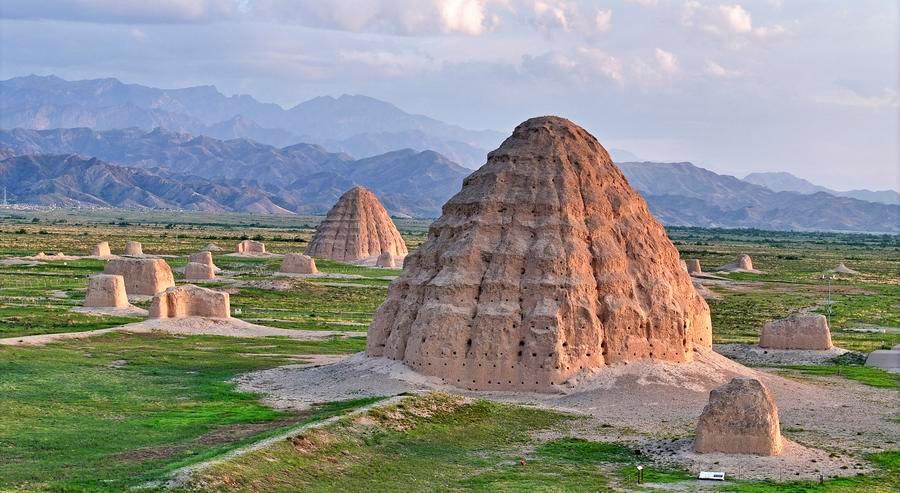
Archaeological findings have also illuminated how cultural diversity and integration unfolded within China's long historical arc. As the largest, highest-ranking and best-preserved archaeological remains of the Xixia Dynasty (1038-1227), the Xixia Imperial Tombs, a UNESCO World Heritage Site, bear witness to a profound blending of cultural influences.
French scholar Romain Lefebvre, a specialist in Xixia studies, noted that Xixia integrated Han Chinese traditions, Buddhist culture and distinct ethnic customs in its mausoleum system, exemplifying the pluralistic yet unified nature of Chinese civilization.
"Throughout the course of Chinese civilization, the trajectory from diversity to unity has consistently reflected the central thread of civilizational integration alongside the unification of the state," said Wang Wei, an archaeologist and member of the Chinese Academy of Social Sciences.
The ancient wisdom embedded in civilizational exchange is also finding renewed global relevance. Over the past year, Chinese and international scholars have convened at platforms such as the Liangzhu Forum and the Nishan Forum on World Civilizations to explore heritage preservation and enduring philosophical traditions.
"It's clear that China is now really thinking in terms of civilizational heritage -- how regions, religions and people with very different cultural backgrounds can come together in more tolerant and respectful ways," said Tim Winter, research cluster leader of Inter-Asian Engagements at the Asia Research Institute of National University of Singapore, at the third Liangzhu Forum -- a view echoed by China's approach to both its own past and global cultural dialogue. ■












Comments