Xinhua Headlines: How a decade of dedicated protection is transforming China's mother river

*Ten years on, through ecological safeguards and technology-driven green development, the Yangtze River Economic Belt is offering a glimpse of how China aims to reconcile growth with long-term environmental resilience.
*Over the past decade, outcomes of the Yangtze conservation drive are tangible and measurable.
*The long-term success of ecological restoration depends more on reshaping the underlying economic structure and fostering an innovation-driven development model.
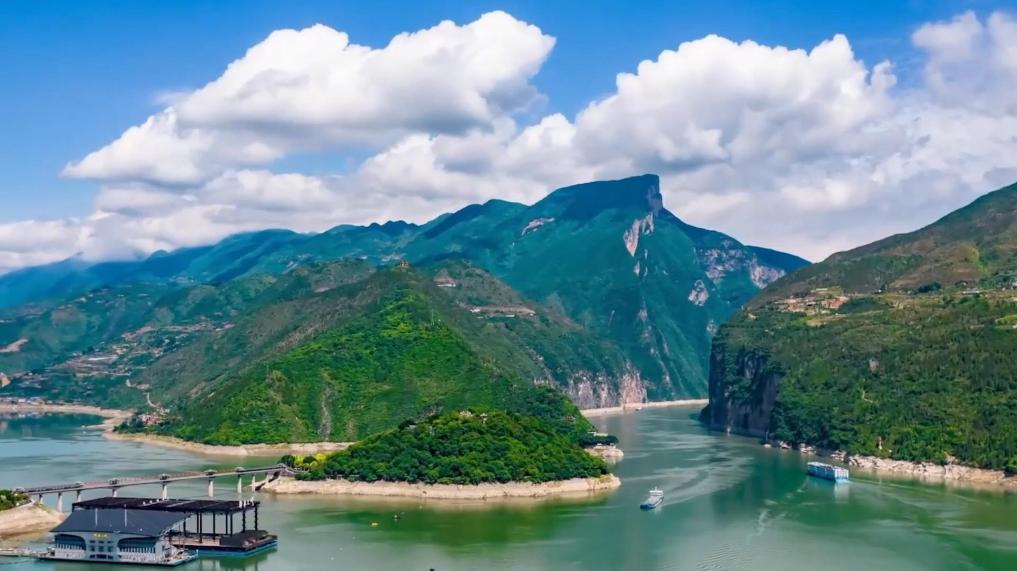
BEIJING, Jan. 6 (Xinhua) -- For much of the past decades, China's longest river, the Yangtze, bore the costs of the country's economic growth. Stretches of the 6,300-kilometer mother river were choked by polluted water, declining biodiversity and mounting disaster risks. However, that trajectory began to shift a decade ago.
Today, water quality on the main stem of the once "seriously ill" river has reached levels once thought unattainable, while fish are returning to stretches where spawning had long ceased.
The turning point came on Jan. 5, 2016, when a meeting on advancing the development of the Yangtze River Economic Belt set a clear principle that the development along the river must prioritize ecology and green development to respect natural, economic and social rules.
Ten years on, through strict ecological safeguards, structural economic reform and technology-driven governance, the Yangtze River Economic Belt, an initiative launched in early 2016, spanning 11 provinces and municipalities and accounting for nearly half of China's GDP, is offering a glimpse of how China aims to reconcile growth with long-term environmental resilience.
"Over the past decade, the Yangtze conservation drive has woven environmental protection into the fabric of high-quality development, reshaping the river basin's growth model," said Wang Yanxin, academician of the Chinese Academy of Sciences. "It has accelerated shifts in how people live and produce, advanced the energy transition, driven industrial restructuring and supported the building of more liveable rural communities. Outcomes are tangible and measurable."
So far, the results are striking. The share of high-quality water sections in the Yangtze basin has climbed from 82.3 percent in 2016 to over 98 percent today, and biodiversity is making a comeback. The population of the iconic species, Yangtze finless porpoises, had climbed to 1,249 in 2023 -- up 23.4 percent from 2017, while 344 native fish species were recorded between 2021 and 2024, 36 more than in the 2017-2020 period.
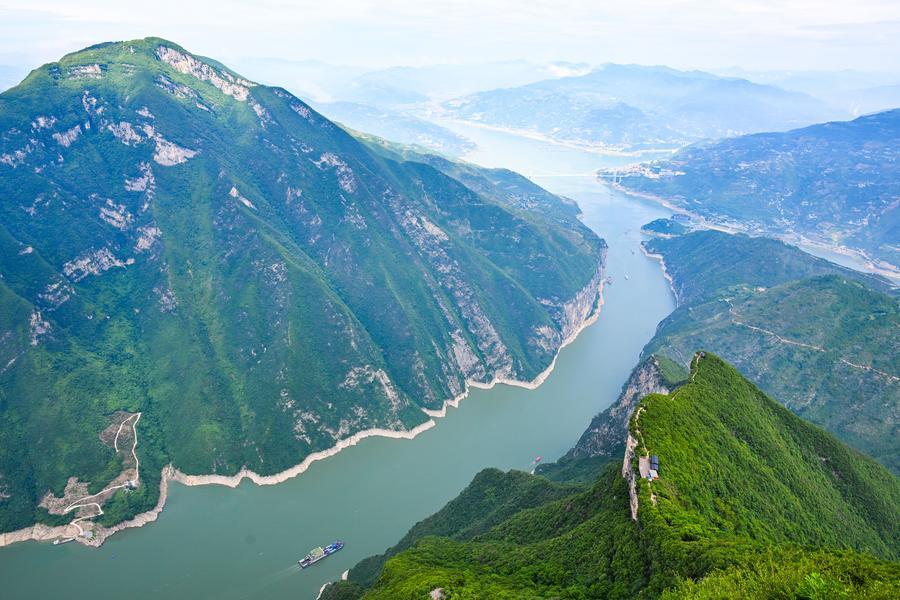
A RIVER ALLOWED TO REST
The most far-reaching intervention came on the first day of 2021, when China imposed a 10-year fishing ban across key waters of the Yangtze basin.
Affecting more than 230,000 fishers in 10 provincial-level regions, the policy aimed to halt a long slide in aquatic biodiversity by taking an unusual step in China's development -- halting exploitation completely.
Southwest China's Chongqing, a major ecological gateway in the upper reaches of the river, offered one of the clearest tests of the policy. More than 5,300 fishing boats were retired and over 10,000 fishers were brought ashore. For many, the shift was existential.
Li Daiguo, 58, had spent more than three decades fishing the river. Today, he wears a patrol uniform. After leaving fishing, he joined a fisheries enforcement team in Dianjiang County, persuading anglers to comply with the ban, clearing rubbish from riverbanks and reporting illegal discharges.
"I know the river. I can still handle a boat," Li said. "My old skills still matter."
These changes have been backed by targeted support. According to official figures, the average annual income of Chongqing's former fishers reached 48,200 yuan (about 6,869 U.S. dollars) in 2024, more than 8 percent higher than before the ban. Many have moved on to work as river wardens, in factories, or have started their own small businesses.
Technology has also played a major role in the effort. Since 2021, Chongqing has built an AI-powered fisheries monitoring system. So far, it has integrated more than 1,200 riverside cameras and dozens of drones, automatically flagging illegal fishing, pollution risks and enforcement blind spots.
Local authorities said they've already handled more than 5,000 alerts, shrinking the gap between what grassroots officials can see and what they can act on.
The ecological payoff is becoming visible. Surveys along Chongqing's stretch of the Yangtze now record 121 fish species, 52 more than before the ban. Rare endemic species such as the Yangtze sturgeon are appearing more frequently. The river's aquatic biodiversity index has risen by two grades.
None of the efforts would have gained traction without a firmer legal and institutional backbone. In March 2021, China enacted its first river-basin-specific law, the Yangtze River Protection Law, which boasted ecological protection and green development as guiding principles and provided a clear legal basis for long-term conservation of the river.
"The ecological impact is already evident, particularly upstream," said Liu Jianhu, an associate professor at Southwest University, noting that both the size and structure of fish populations have improved since the conservation campaign and fishing ban took effect.
GREEN DEVELOPMENT AMID CONSERVATION
The Yangtze River Economic Belt's experiment in green development rests on a once-neglected premise: environmental protection and economic growth need not be treated as opposing forces.
Over the past decade, amid the Yangtze protection drive, the economic belt has seen its regional GDP more than double over the period, while treating conservation not as a brake on growth but as a condition for its durability.
According to the National Development and Reform Commission, the country's top economic planner, the economic belt currently contributes 47.3 percent of the national economic output, up from 42.2 percent 10 years ago.
The long-term success of ecological restoration, policymakers and scholars argue, depends less on short-term clean-up campaigns and more on reshaping the underlying economic structure and fostering an innovation-driven development model.
In the last 10 years, the Yangtze River Economic Belt has emerged as one of China's most dynamic innovation hubs, as technological advances increasingly translate into industrial strength and global competitiveness.
It has produced a number of internationally competitive technology companies, including AI startup DeepSeek and stellar robotics maker Unitree Robotics, alongside the rise of world-class industrial clusters in sectors such as automobile manufacturing and electronic information.
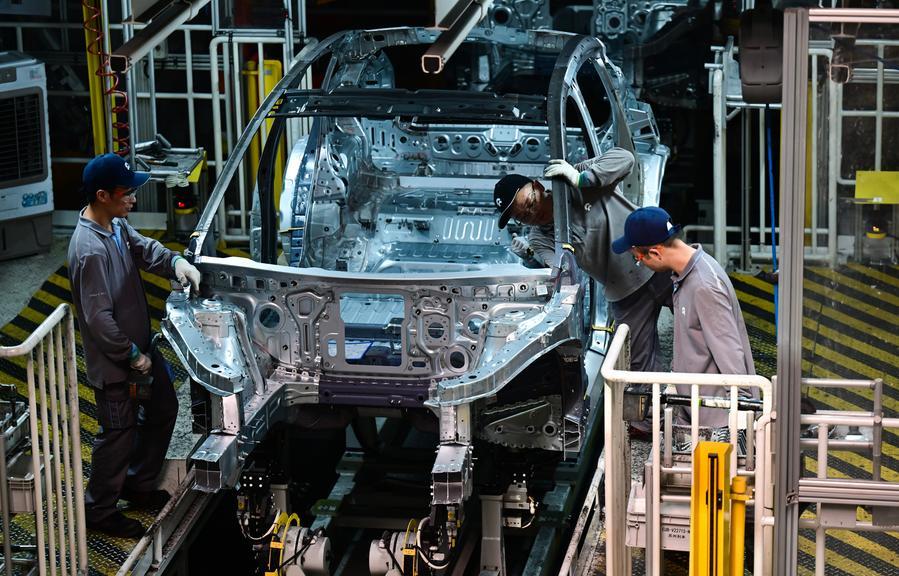
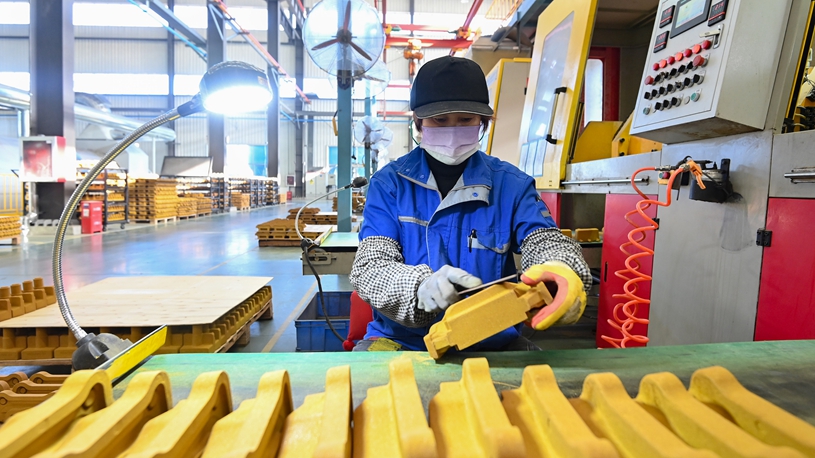
Nowhere is this approach more profound than in the Yangtze River Delta, where green industries have been scaled with industrial efficiency. Producing a new-energy vehicle in the region can now take as little as four hours, with design and core software developed in Shanghai, battery systems installed in Anhui, final assembly completed in Jiangsu and in-car intelligent systems tested in Zhejiang.
The delta has emerged as China's largest automotive manufacturing hub, accounting for nearly 40 percent of the country's new-energy vehicle output and more than a quarter of global production.
Standing as a striking contrast, the region has pressed ahead with a campaign to phase out outdated industrial capacity and tackle the pollution it left behind.
During the period, a total of 1,361 illegal docks have been dismantled, and more than 200,000 discharge outlets along the Yangtze have been standardized or closed, while more than 90 percent of black and malodorous water bodies in county-level cities have now been brought under control.
Speaking at a press conference on Monday, Wang Changlin, deputy head of the NDRC, highlighted the progress the region has made. Wang noted that while the economic belt accounts for roughly one-third of China's energy consumption and carbon emissions, it generates close to half of the country's GDP, underscoring its growing role as a leading test bed for environmentally prioritized, green development.
The official also told the press conference that NDRC vowed to accelerate the green transformation of traditional industries along the river, while fostering locally tailored green and low-carbon sectors.
"The Yangtze conservation drive has made a strong start, but its success will ultimately depend on sustained commitment," Wang Yanxin told Xinhua. "The next phase of Yangtze protection will hinge on better use of technology, closer coordination between pollution control and carbon reduction, and the development of market-based mechanisms for environmental governance."
(Video reporters: Li Aibin, Zhao Xiaoshuai, Wang Yan, Rao Rao and Jiang Zhiqiang; video editors: Wu Yao, Luo Hui and Zhao Xiaoqing) ■







Comments