China Focus: Chinese researchers uncover record-high evidence of ancient human activity on eastern Qinghai-Tibet Plateau

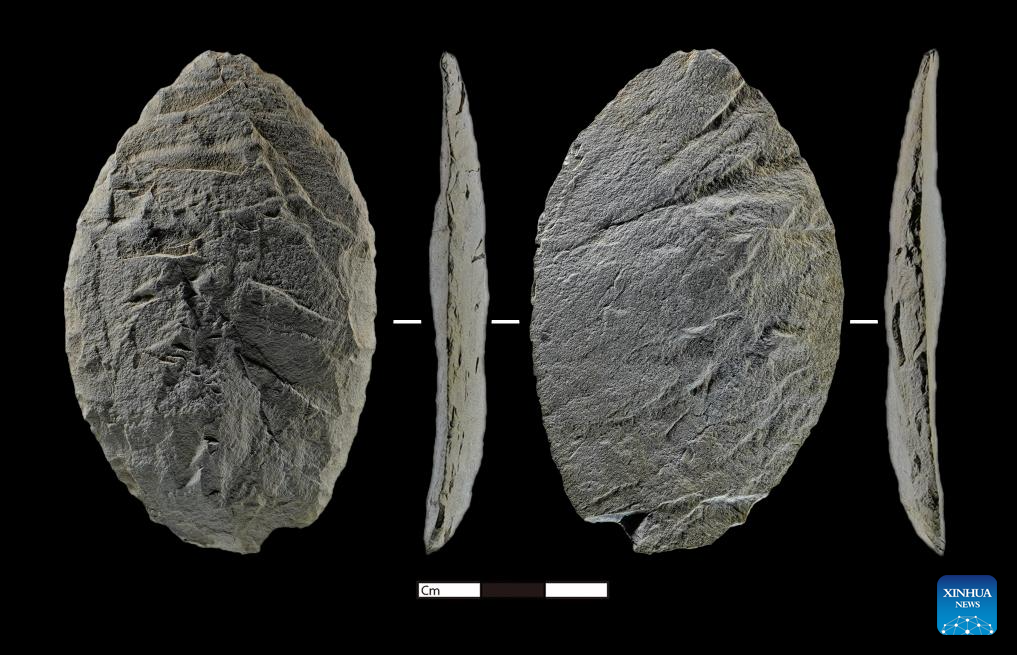
This undated combo photo shows front, back and side views of a stone artifact unearthed from the Tsungqen Co site in Daocheng County, Garze Tibetan Autonomous Prefecture, southwest China's Sichuan Province. (Sichuan Provincial Cultural Relics and Archaeology Research Institute/Handout via Xinhua)
CHENGDU, Dec. 22 (Xinhua) -- Chinese archaeologists have uncovered a significant Paleolithic site at an unprecedented altitude on the eastern Qinghai-Tibet Plateau, offering fresh insights into early human migration and adaptability, according to the Sichuan Provincial Cultural Heritage Administration.
Located near Tsungqen Co, a highland lake in Daocheng County, Tibetan Autonomous Prefecture of Garze, Sichuan Province, the site represents the highest-altitude evidence of ancient human presence in the region to date.
Detailed findings were published in the journal Palaeogeography, Palaeoclimatology, Palaeoecology by a research team from Peking University and the Sichuan Provincial Cultural Relics and Archaeology Research Institute.
Tsungqen Co, meaning "big lake" in the local language, is one of numerous glacial lakes that formed after the Last Glacial Maximum through melting glaciers. These water bodies have long attracted diverse fauna, providing vital resources for ancient hunter-gatherer communities.
The newly discovered Tsungqen Co site, situated at an elevation exceeding 4,300 meters, forms part of the renowned Piluo site complex, which was honored as one of China's top 10 archaeological discoveries of 2021.
While the main Piluo site, located at an average altitude of 3,750 meters and dating back over 200,000 years, is recognized as the earliest, largest and most prolific Paleolithic site on the Qinghai-Tibet Plateau, the Tsungqen Co site occupies an even higher elevation, with its earliest cultural layers dating to approximately 12,000 years ago.
Archaeologists unearthed over 190 stone artifacts at the Tsungqen Co site, with the assemblage predominantly comprising small-to-medium-sized tools. This collection reflects a sophisticated microlithic industry, showcasing refined manufacturing techniques that suggest specialized technological adaptations to the high-altitude environment.
The Qinghai-Tibet Plateau, often referred to as the "Third Pole" due to its extreme elevation, low oxygen levels and frigid temperatures, has traditionally been regarded as a formidable challenge for human survival and expansion. The discovery of the Tsungqen Co site marks a pivotal breakthrough in Paleolithic archaeology on the eastern flank of the plateau, significantly advancing our understanding of human activity in high-altitude zones.
"This was not merely a temporary camp. More likely, it was a habitation site revisited repeatedly," said Zheng Zhexuan, lead archaeologist of the Piluo site project and head of the Paleolithic Archaeology Institute at the Sichuan Provincial Cultural Relics and Archaeology Research Institute.
"It suggests that over ten thousand years ago, ancient populations already took advantage of warmer climatic phases to settle by highland lakes. They penetrated and persisted in this high-altitude region, demonstrating a relatively stable capacity to adapt to the plateau environment," Zheng added.
Experts describe the Tsungqen Co site as a crucial "spatiotemporal key," bridging a critical gap in the evidence chain of human activity on the "roof of the world." This discovery provides invaluable material for investigating the dispersal routes of early modern humans in East Asia and their adaptive survival strategies under diverse ecological pressures.
Excavations and multidisciplinary research at the Piluo site are currently underway. Scientists are conducting comprehensive analyses in chronology, environmental archaeology, and related fields on the unearthed remains, aiming to reconstruct a more precise and nuanced understanding of ancient lifeways in this region. ■
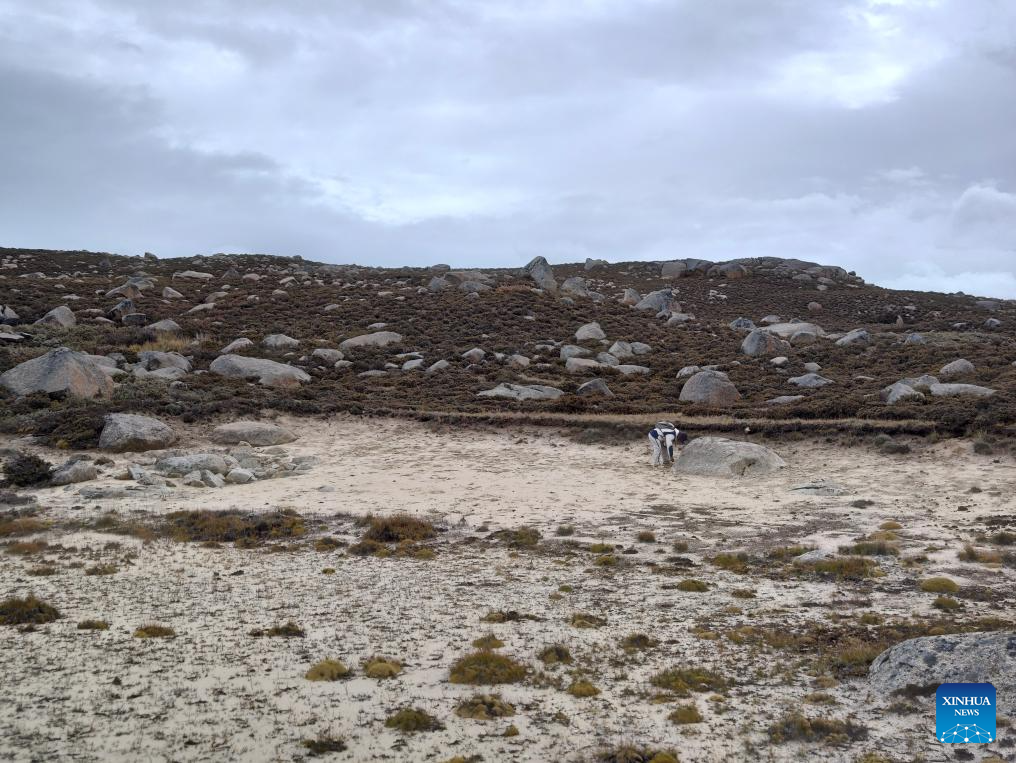
This photo taken on Oct. 6, 2023 shows a view of the Tsungqen Co site in Daocheng County, Garze Tibetan Autonomous Prefecture, southwest China's Sichuan Province. (Sichuan Provincial Cultural Relics and Archaeology Research Institute/Handout via Xinhua)
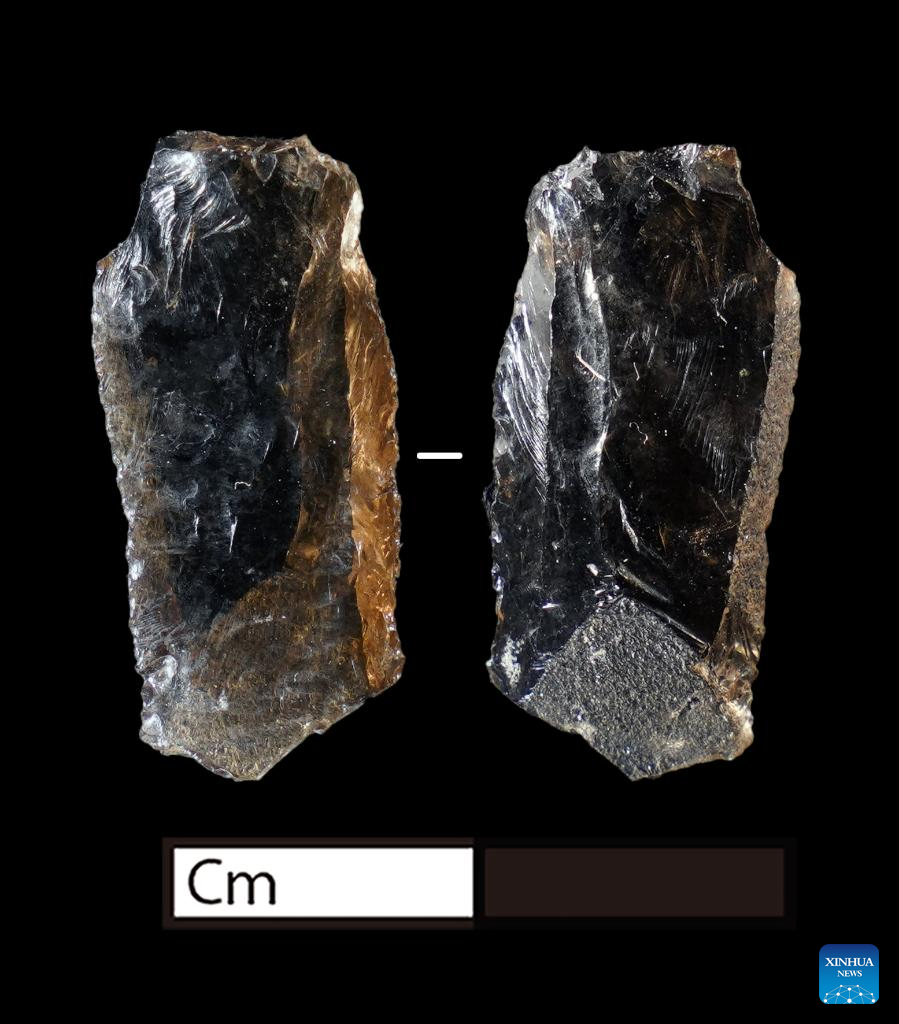
This undated combo photo shows front and back views of a stone artifact unearthed from the Tsungqen Co site in Daocheng County, Garze Tibetan Autonomous Prefecture, southwest China's Sichuan Province. (Sichuan Provincial Cultural Relics and Archaeology Research Institute/Handout via Xinhua)


