EcoChina | China makes steady gains in ecological conservation and green transition
Source: Xinhua
Editor: huaxia
2025-12-22 21:46:15
This photo taken on Nov. 20, 2025 shows the scenery of the Yamzbog Yumco Lake in southwest China's Xizang Autonomous Region. (Xinhua/Li Jian)
BEIJING, Dec. 22 (Xinhua) --China has made solid progress in ecology and environment protection during its 14th Five-Year Plan period (2021-2025), marked by sustained improvements in many ways.
An aerial drone photo taken on Aug. 25, 2025 shows tourists visiting the Jinshanling section of the Great Wall in Luanping County of Chengde, north China's Hebei Province. (Photo by Zhou Wanping/Xinhua)
Contributing a quarter of the world's new green areas since 2000, China's forest coverage rate has risen to 25.09 percent, underscoring steady advances in large-scale afforestation and ecological restoration programs. Meanwhile, the country's forest stock volume has reached 20.99 billion cubic meters, hitting the 2030 target ahead of schedule.
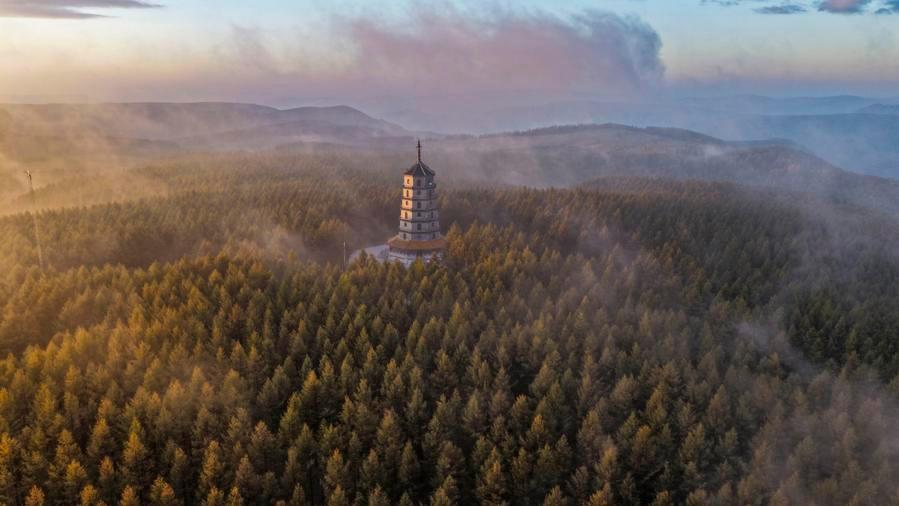
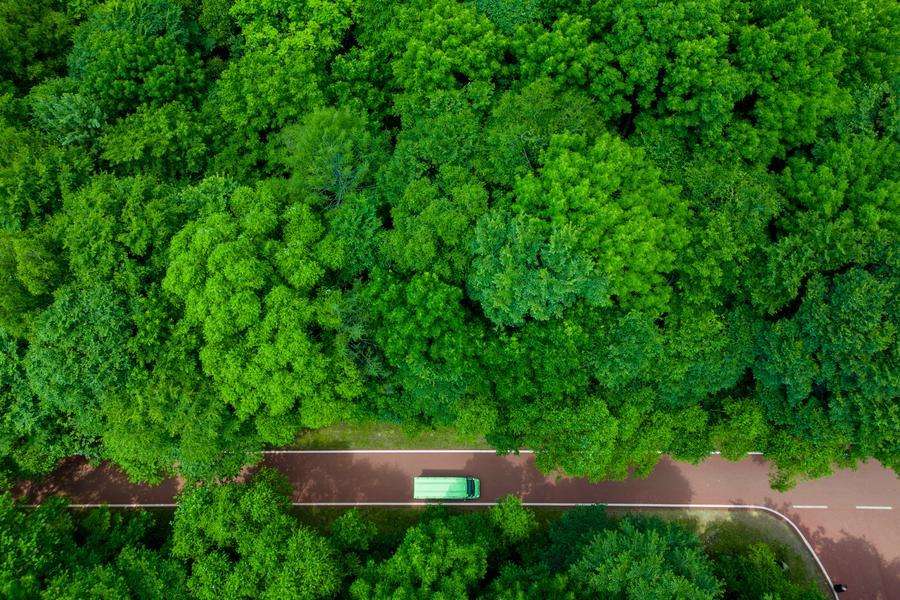
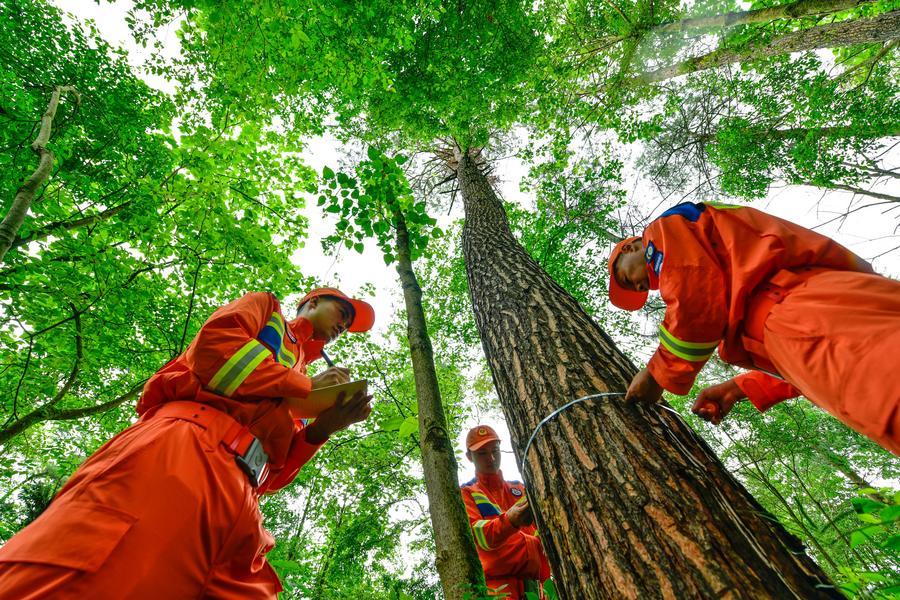
An aerial drone photo taken on Sept. 24, 2025 shows the autumn scenery in the Saihanba National Forest Park in Chengde City, north China's Hebei Province. (Photo by Liu Mancang/Xinhua)An aerial drone photo taken on July 11, 2024 shows a vehicle running in Shangganling stream forest park in Yichun, northeast China's Heilongjiang Province. (Xinhua/Zhang Tao)Forest rangers measure the diameter of a tree at the Changpoling Forest Farm in Guiyang, southwest China's Guizhou Province, July 1, 2025. (Xinhua/Yang Wenbin)
Water quality has also seen notable improvement. In 2024, 90.4 percent of national surface water monitoring sections met good water quality standards, surpassing 90 percent for the first time.
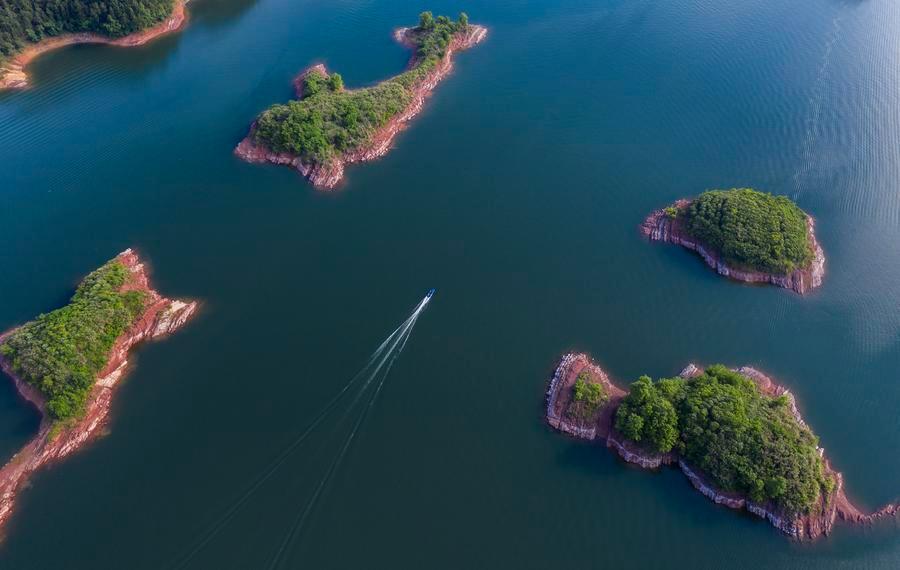
An aerial photo taken on Sept. 9, 2025 shows a view of the Xiaonanhai wetland nature reserve in southwest China's Chongqing. (Xinhua/Tang Yi)An aerial drone photo taken on June 3, 2025 shows a view of the Qiandao Lake in east China's Zhejiang Province. (Xinhua/Xu Yu)An aerial drone photo taken on Sept. 16, 2025 shows local people sailing around an island while circling the lake by boat in Yanyuan County of Liangshan Yi Autonomous Prefecture, southwest China's Sichuan Province. (Xinhua/Jiang Hongjing)
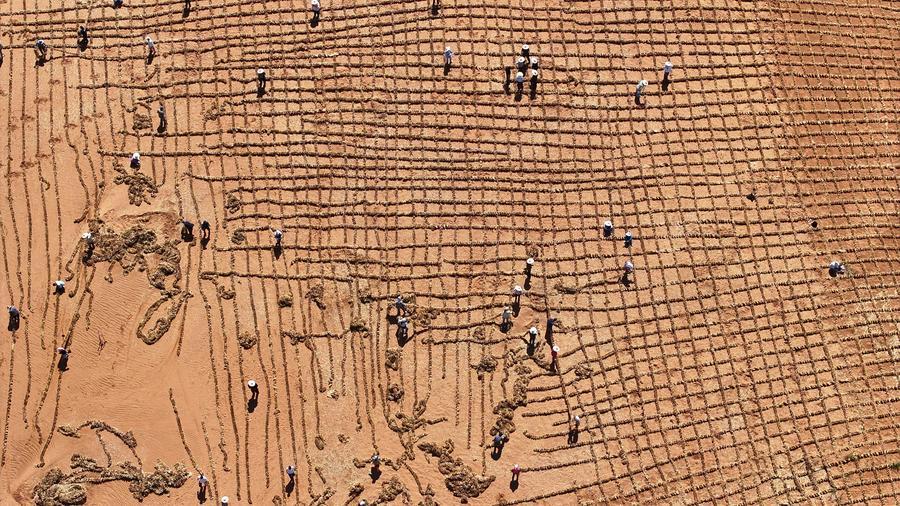
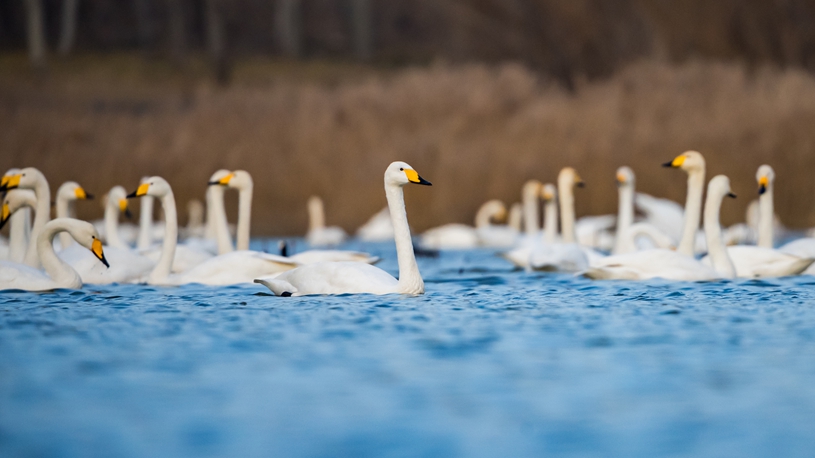
Efforts to restore key ecosystems have also yielded results. China has rehabilitated more than 2.4 million mu (160,000 hectares) of abandoned mines, restored 820 kilometers of coastline, repaired 760,000 mu (about 50,667 hectares) of coastal wetlands during the period of time and has cumulatively treated 105 million mu (7 million hectares) of desertified land, strengthening its capacity to combat desertification and land degradation.
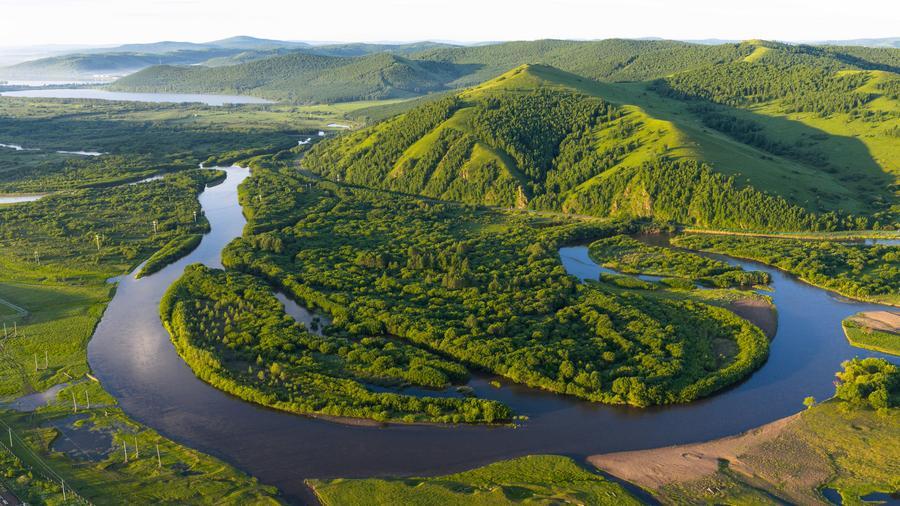
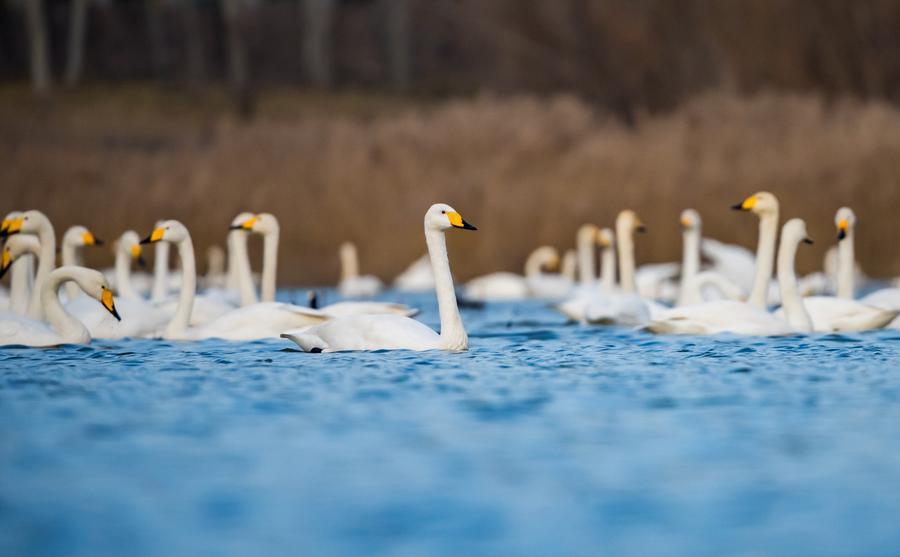
An aerial drone photo taken on June 30, 2025 shows people laying sand barriers at the site of a desertification control project in Zhongewei, northwest China's Ningxia Hui Autonomous Region. (Xinhua/Wang Peng)This aerial drone photo taken on July 11, 2025 shows the scenery of the Mianduhe national wetland park in Hulun Buir, north China's Inner Mongolia Autonomous Region. (Xinhua/Ma Jinrui)This photo taken on Dec. 20, 2025 shows swans at a wetland in Sanmenxia, central China's Henan Province. (Photo by Zhao Yongtao/Xinhua)
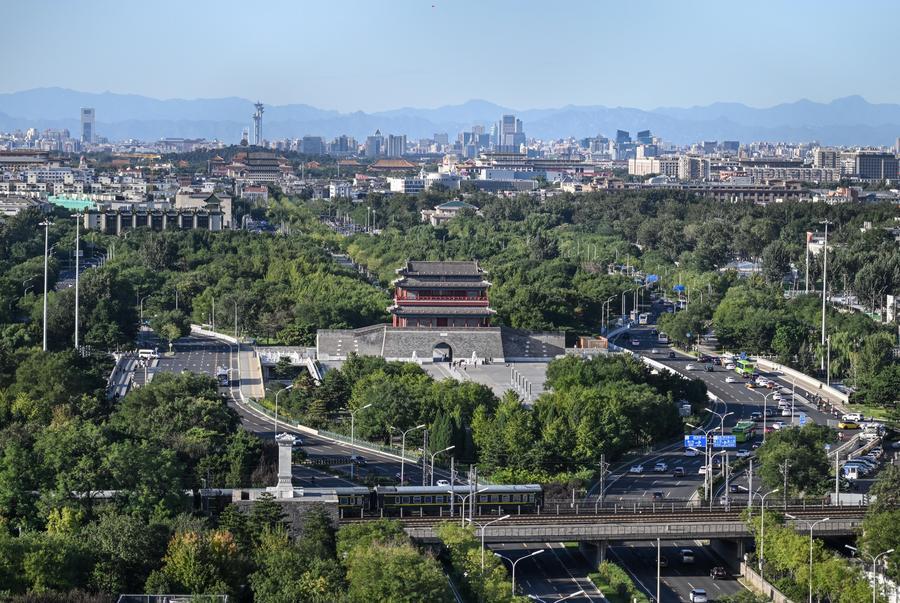
Chinese cities have reported steady progress in air quality. In 2024, in cities at and above the prefecture level, the average PM2.5 density, a key indicator of air pollution, dropped to 29.3 micrograms per cubic meter, down 16.3 percent from 2020. And the proportion of days with good air quality increased 2.4 percentage points from 2020 to 87.2 percent, reflecting continued efforts to curb pollution and promote cleaner production and lifestyles.
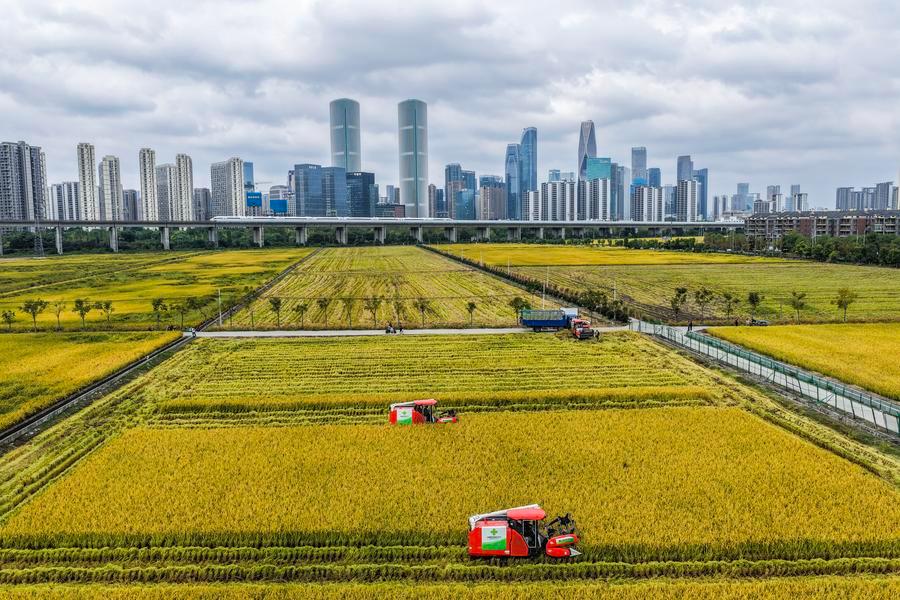
This photo taken on Sept. 27, 2025 shows the city view of Beijing, capital of China. (Xinhua/Chen Yehua)An aerial drone photo taken on Sept. 4, 2025 shows a city view in Kunming, southwest China's Yunnan Province.(Xinhua/Chen Xinbo)A drone photo taken on Oct. 21, 2025 shows harvesters harvesting rice in a paddy field, with a high-speed train in the background, in Hangzhou, east China's Zhejiang Province. (Xinhua/Xu Yu)
China has also made rapid strides in green energy development. By the end of June 2025, the country's installed capacity of renewable energy had reached 2.159 billion kilowatts, further consolidating its position as a global leader in renewable power generation.
In parallel, China has established the world's largest carbon emissions trading market, a key institutional tool aimed at reducing greenhouse gas emissions through market-based mechanisms and advancing the country's climate goals.
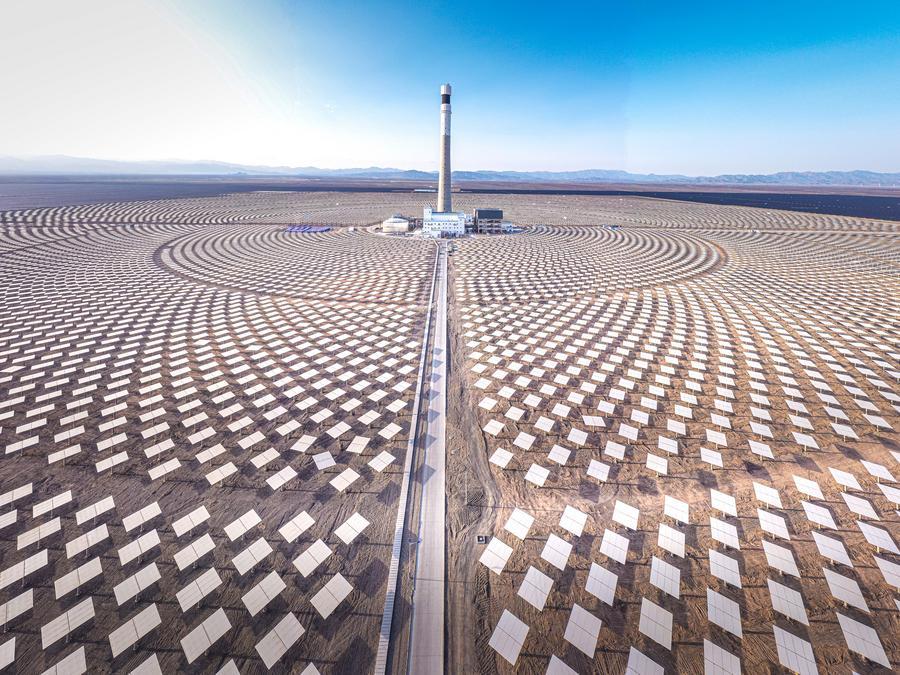
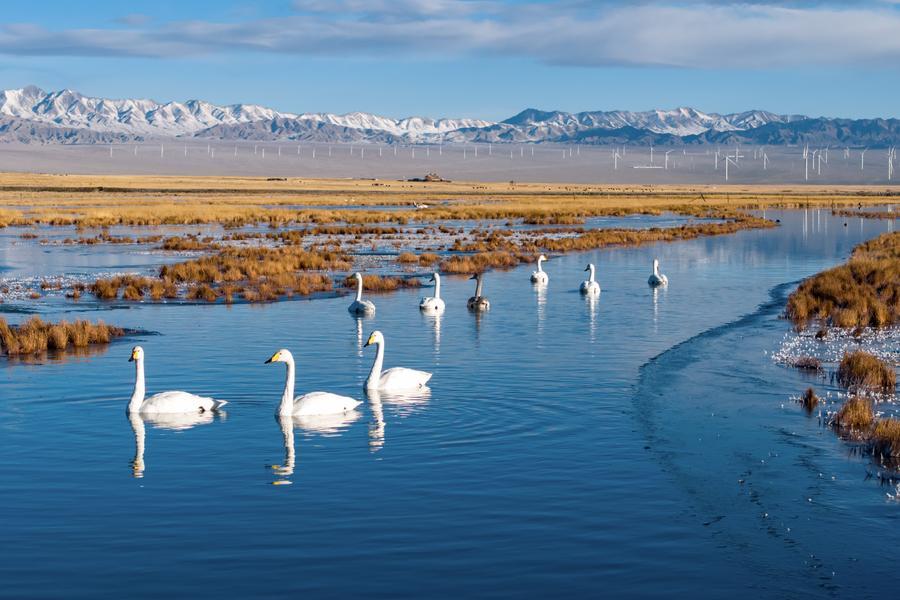
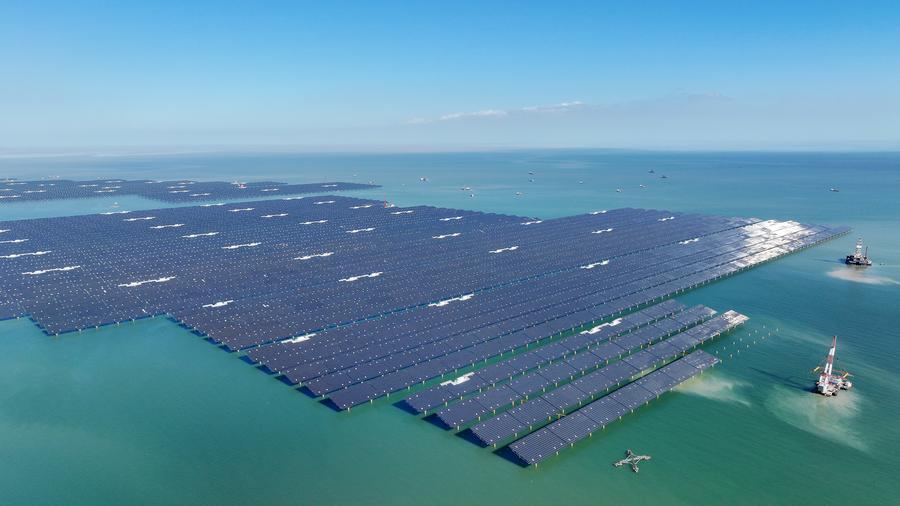
An aerial drone photo taken on July 28, 2025 shows a 1GW solar thermal and photovoltaic integrated project in Shanshan County, northwest China's Xinjiang Uygur Autonomous Region. (Photo by Xu Zipeng/Xinhua)An aerial drone photo taken on Nov. 14, 2025 shows whooper swans at the Xiaosugan lake wetland with wind turbines in the background in Kazak Autonomous County of Aksay, northwest China's Gansu Province. (Xinhua/Lang Bingbing)An aerial drone photo taken on Nov. 13, 2025 shows an offshore photovoltaic project in Dongying City, east China's Shandong Province. (Photo by Zhou Guangxue/Xinhua)
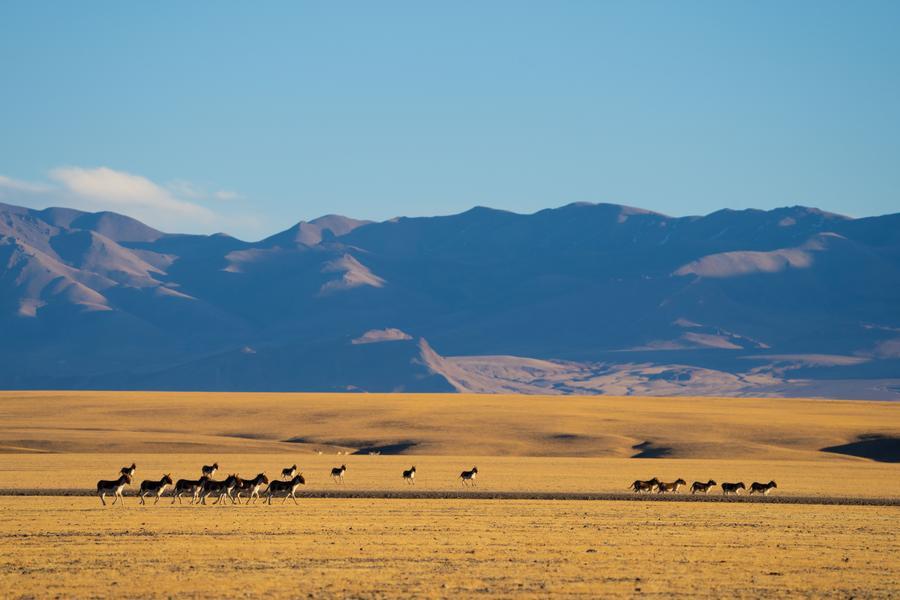
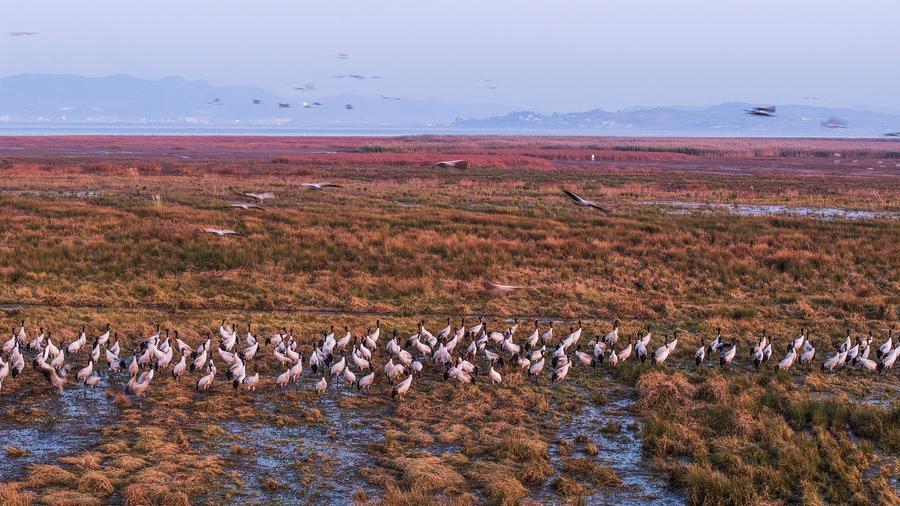
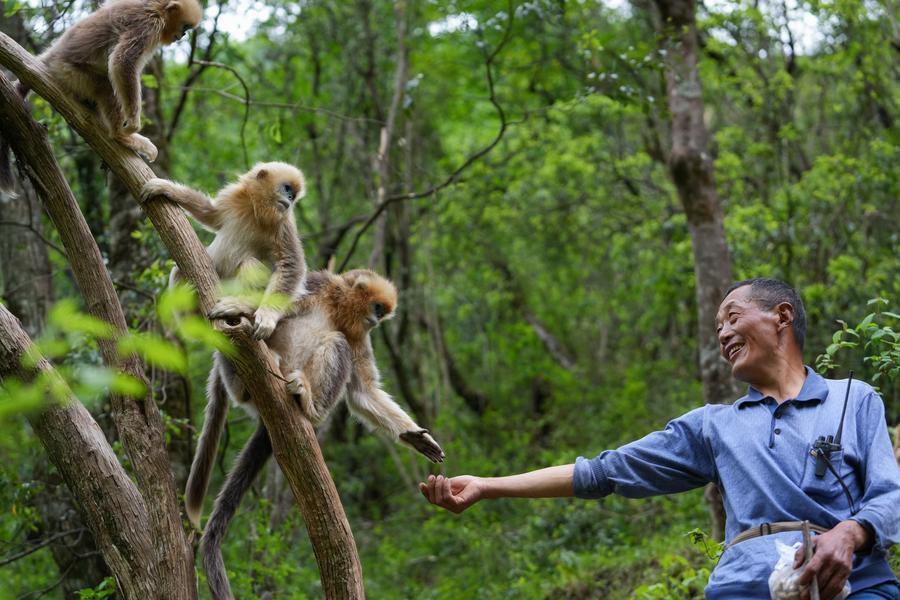
During the 14th Five-Year Plan period, China advanced the implementation of major biodiversity conservation projects, effectively safeguarding 90 percent of terrestrial ecosystem types and 74 percent of key wild animal and plant populations.
This photo taken on Dec. 3, 2025 shows kiangs (Equus kiang) at the Changtang National Nature Reserve, southwest China's Xizang Autonomous Region. (Xinhua/Guo Yu)A drone photo shows black-necked cranes at Caohai National Nature Reserve in Yi-Hui-Miao Autonomous County of Weining, southwest China's Guizhou Province, Dec. 1, 2025. (Xinhua/Yang Wenbin)A ranger interacts with Sichuan golden snub-nosed monkeys in the Pingwu Sichuan golden snub-nosed monkey popular science education base in Pingwu County, Mianyang City of southwest China's Sichuan Province, May 21, 2025. (Xinhua/Jiang Hongjing)
Looking ahead to the 15th Five-Year Plan period (2026-2030), China will continue to accelerate the building of a Beautiful China, where humans and nature coexist in harmony.■

















Comments