China Focus: Beyond nails and rivets, digital tools safeguard millennium-old bridge craft


This photo taken on Dec. 10, 2025 shows a wooden bridge in Qingyuan County of Lishui City, east China's Zhejiang Province. (Xinhua/Liu Ziyi)
HANGZHOU, Dec. 17 (Xinhua) -- Amid efforts to preserve the millennium-old traditional design and practices for building Chinese wooden arch bridges, advanced and accessible technology, including AI and VR, is injecting new vitality into the timeless craft.
The wooden arch bridges, found mostly in eastern China's Fujian and Zhejiang provinces, are built without a single metal nail or rivet, relying instead on intricately fitted wooden structures. This very design, however, leaves the bridges vulnerable to fire and flooding. Over the years, the tradition had declined due to erosion and rapid urbanization.
On Dec. 5, 2024, the design techniques and construction practices of such bridges were inscribed on UNESCO's Representative List of the Intangible Cultural Heritage of Humanity, marking the culmination of China's efforts to safeguard and revitalize this tradition.
According to the Communist Party of China Central Committee's recommendations for formulating the 15th Five-Year Plan (2026-2030), cultural heritage protection should be systematically advanced and put under unified supervision and inspection.
Technology has made these bridges accessible to a wider public. As their design is closely integrated with the natural environment, people are increasingly able to experience them beyond geographic limits through 3D models, virtual reality and interactive 3D puzzles.
WIDER REACH
Hu Junfeng, a 28-year-old inheritor of traditional wooden arch bridge-building techniques, has followed in the footsteps of his father, Hu Miao, a national-level representative inheritor who has devoted over four decades to preserving the craft.
After working for three years in Shanghai, Hu Junfeng returned to his hometown in Qingyuan County, Lishui City of Zhejiang in 2022 to devote himself to the craftsmanship. Since then, he has used drones, cameras and digital tools to survey eight iconic bridges in Qingyuan, creating both a detailed database and precise 3D models.
"Not everyone has the chance to visit these bridges in person," he said. "I aim to let the bridges 'journey' out and connect with a wider audience. These digital models will ensure their legacy endures, even if the physical structures may someday be altered or lost."
"The deeper purpose is to safeguard the history of the bridges while finding new, engaging ways to pass on the heritage," he said, noting the potential of such digital preservation. He cited the example of Lishui's historic Shisi Temple, which was digitally scanned and featured in the blockbuster video game "Black Myth: Wukong" as an example of using technology to promote traditional culture.
Hu Junfeng has also developed hands-on models for educational outreach, helping students better understand the technique. He is not alone in this endeavor. In nearby Taishun County of Wenzhou City, another inheritor, Wu Zhichang, has designed 3D wooden puzzles of the bridges.
"Students of all ages may gain a genuine appreciation for the skill and beauty of China's classic timber architecture by using these bridge models," Wu said, noting that he has led these hands-on workshops hundreds of times across schools and universities.
GUIDED BY CODE
The inheritance of techniques has long depended on a master's direct and personalized guidance. The time-honored yet vulnerable approach has been challenged by spatiotemporal constraints, a scarce and aging workforce, long apprenticeship duration, and the lack of technical standardization.
"Modern technology, represented by AI, is paving new paths for preserving the craft," said Zheng Weigui, deputy director of the general office, Zhejiang Provincial Center for the Protection of Intangible Cultural Heritage.
Zheng explained that AI-assisted teaching systems can digitally decompose the bridge assembly and create visual, interactive digital models, making the craft easier for learners, especially younger generations, to understand.
AI's potential extends beyond training inheritors to broadening public access to the craft. According to Zheng, plans are underway to use sensors and computer vision to digitally capture and analyze users' movements.
Under the plan, when visitors practice bridge assembly -- similar to other interactive experiences at the Zhejiang Intangible Cultural Heritage Museum -- AI will compare their motions in real time and provide step-by-step audiovisual guidance, acting as a patient, tireless virtual master.
BRIDGING CULTURES
The fusion of cutting-edge technology and ancient wisdom does more than preserve forms. It sustains the very spirit of connection that these bridges embody and inspires preservation endeavors by scholars around the world.
Matthew Wood, an Australian lecturer at Wenzhou-Kean University, is developing a VR prototype for wooden arch bridges with his students as part of a summer project this year. Rather than simply viewing photographs, the VR experience allows users to walk around and even fly above the bridge, offering a more immersive and authentic sense of its environment.
"Having student participation was an important part of the project," Wood said, noting that these students were all from Zhejiang, and they gave up their summer holidays to work on this project because they are interested in working with immersive media, all cared about their local cultural heritage, and wanted to help in its conservation.
Similar VR projects usually require a large team, expensive equipment and a long production schedule. In contrast, Wood's team is trying to create a VR experience through simpler, consumer-level tools like drones, 360 cameras and open source software.
"The hope is that if the process is affordable and easy enough, local schools and community groups could eventually take part themselves," said Wood, adding that the project is in active development and the next steps are to add more historical information, refine the design and collect stories from the local community.
"Bridges are such a positive symbol. They unite and bring people together as a symbol of resilience and adaptation. Over centuries, these bridges have survived floods and been rebuilt after destruction. Their continuity is part of their identity," Wood said. ■
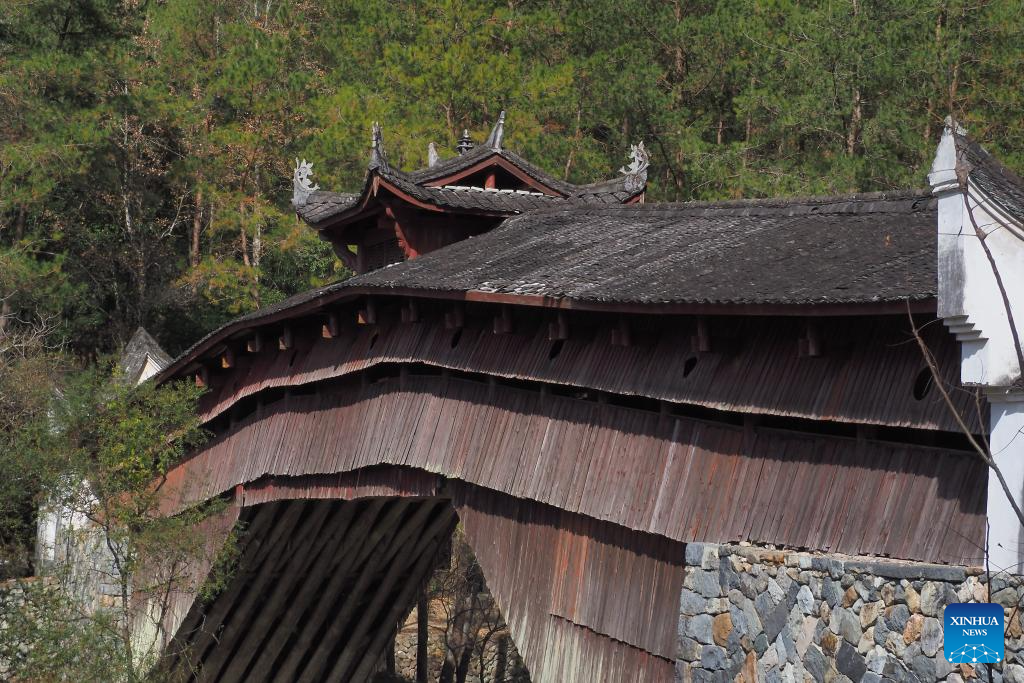
This photo taken on Dec. 10, 2025 shows a wooden bridge in Qingyuan County of Lishui City, east China's Zhejiang Province. (Xinhua/Liu Ziyi)
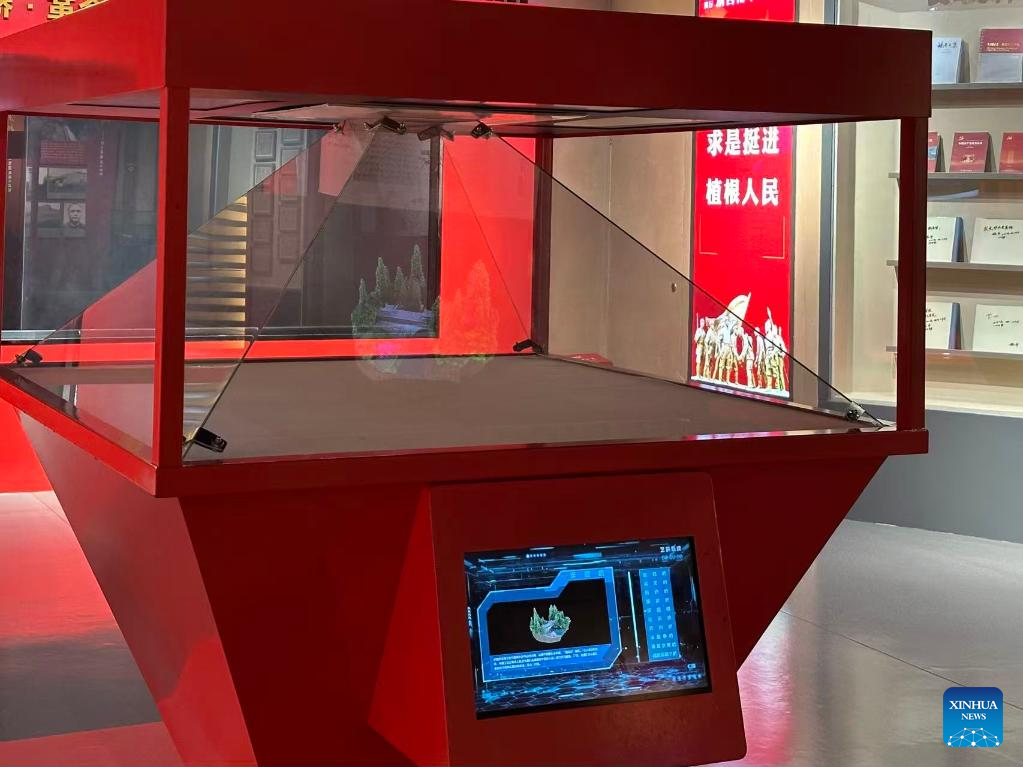
This photo taken on Dec. 10, 2025 shows a display installation of wooden arch bridges at a museum in Qingyuan County of Lishui City, east China's Zhejiang Province. (Xinhua/Liu Ziyi)


